Fairy garden crafts turn ordinary pots, garden corners, and containers into tiny worlds filled with charm. You can make miniature houses, winding pathways, tiny bridges, and playful decorations using simple materials. Some projects work beautifully outdoors, while others fit perfectly on a balcony or windowsill.
These fairy garden ideas suit beginners, families, and anyone who enjoys small creative projects. You can reuse natural materials, decorate inexpensive containers, and personalize each detail to match your garden. Start with one small feature and build your miniature landscape at your own pace.
Planning more projects? You may also like our air dry clay crafts for beginners and creative jar crafts.
28 Fairy Garden Crafts to Try
These fairy garden crafts combine miniature structures, natural materials, and handmade decorations to create a whimsical little landscape.
1. Miniature Fairy House From Twigs
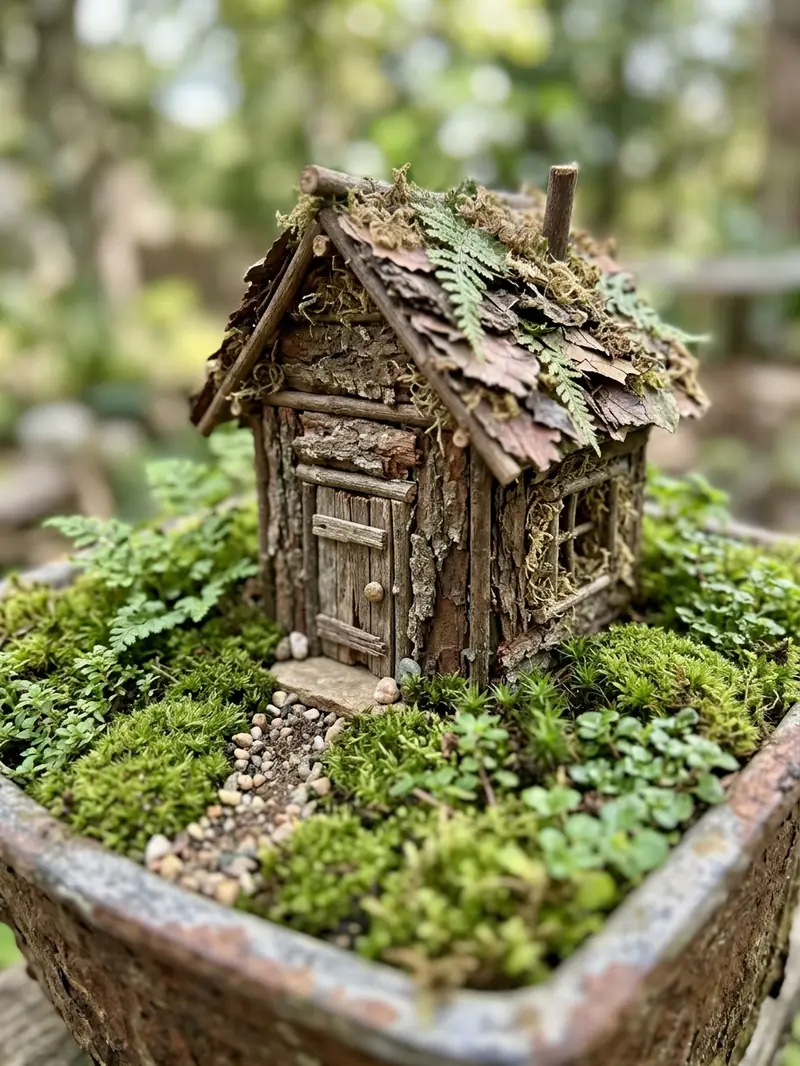
A twig fairy house brings a woodland feeling to any miniature garden. Collect clean, dry twigs and arrange them around a small cardboard or wooden base. Use craft glue suitable for your materials to secure the walls.
Add bark pieces for the roof and a small wooden door. Surround the house with moss, pebbles, and tiny plants for a natural finish. For outdoor placement, choose weather-resistant materials and protect cardboard components from moisture.
2. Pebble Fairy Garden Pathway
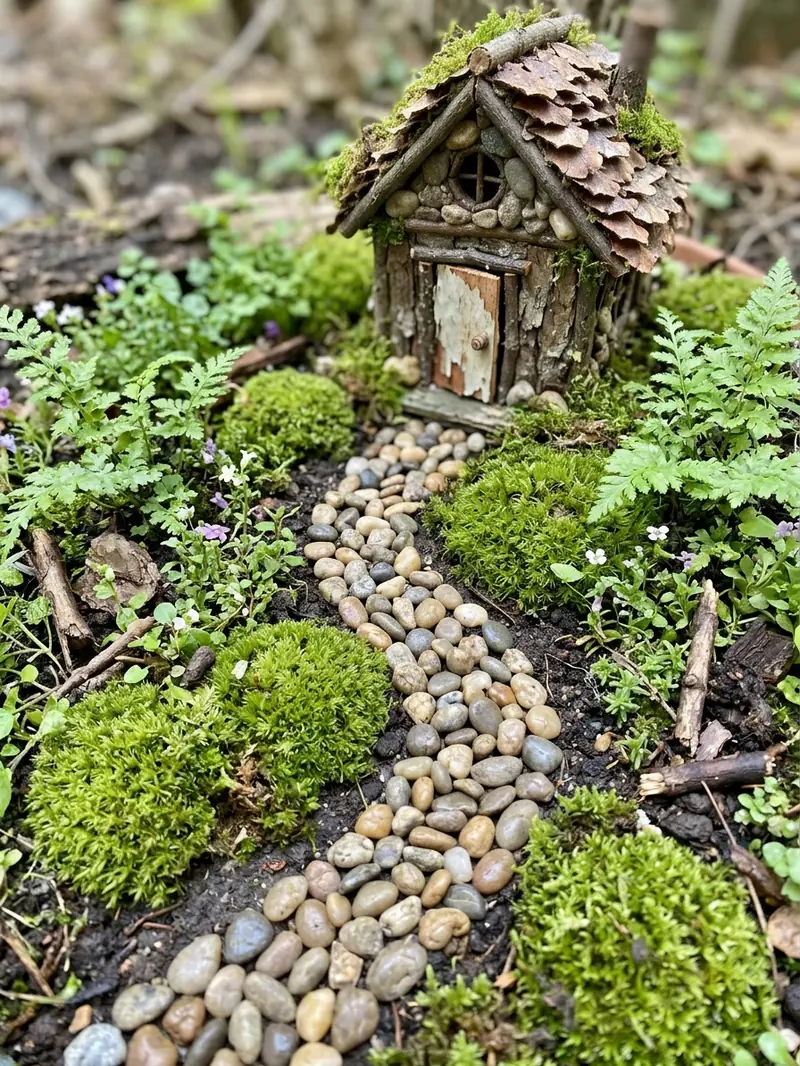
A pebble pathway gives a fairy garden structure and makes the miniature setting feel more realistic. Choose stones in similar sizes for a neat path or mix shapes for a more natural woodland look.
Arrange the pebbles in a gentle curve rather than a straight line. Press them into the soil so they stay in place. For a container garden, leave enough room for plants to grow around the pathway.
3. Tiny Fairy Door for a Tree
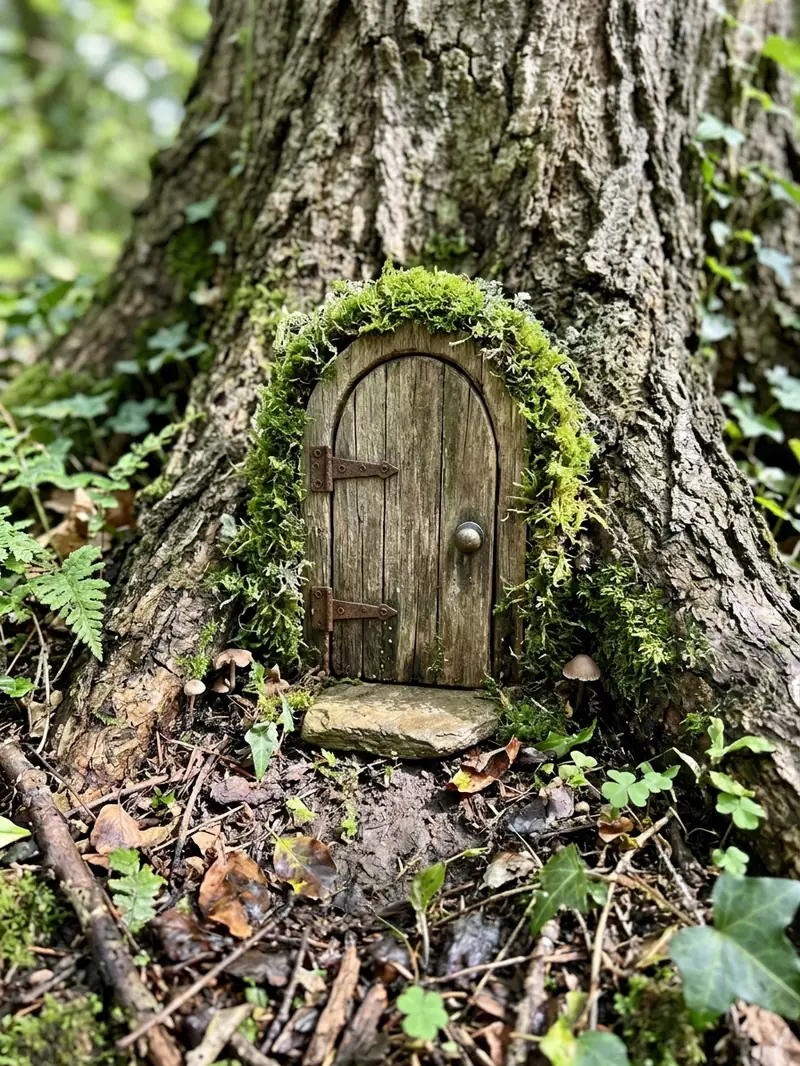
A miniature tree door creates the illusion of a hidden home inside a tree. You can make one from thin craft wood, popsicle sticks, or a shaped piece of bark.
Paint the door in muted green, soft blue, or natural brown. Add a tiny knob and a few small stones at the entrance. Attach it securely without damaging living bark, and use weather-resistant materials if it will remain outside.
4. Fairy Garden in a Terracotta Pot
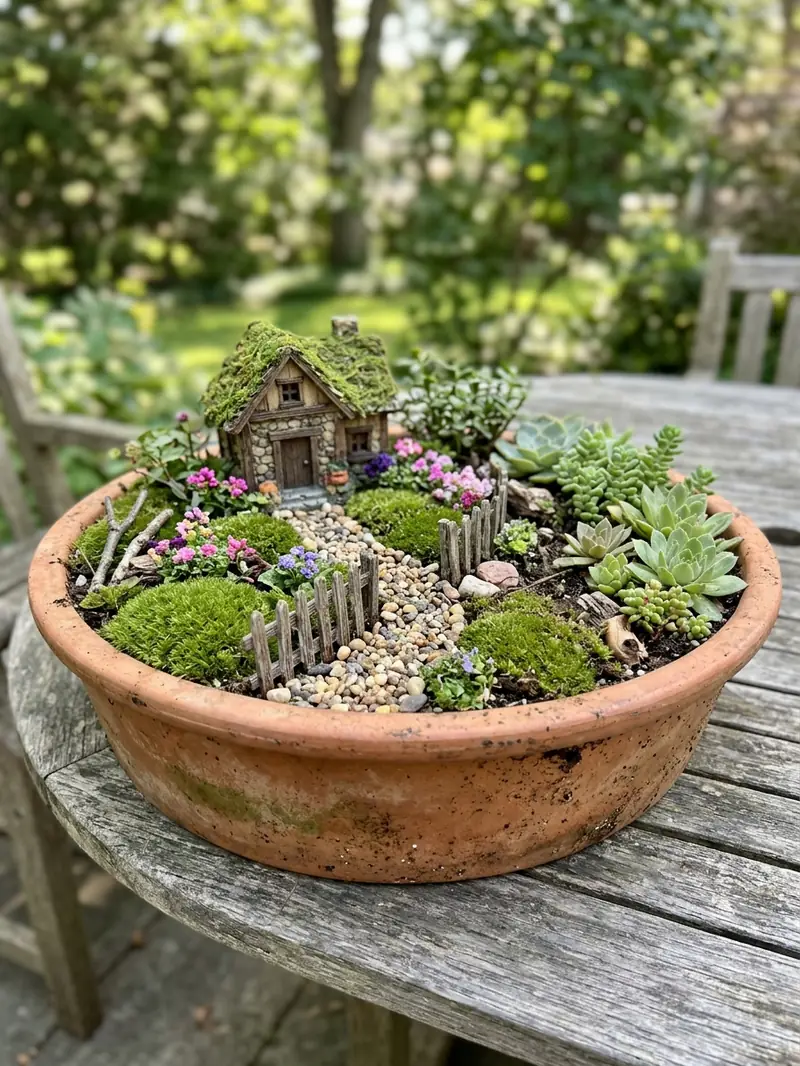
A terracotta pot makes a convenient home for a small fairy garden. Its compact shape allows you to create different levels without needing a large outdoor space.
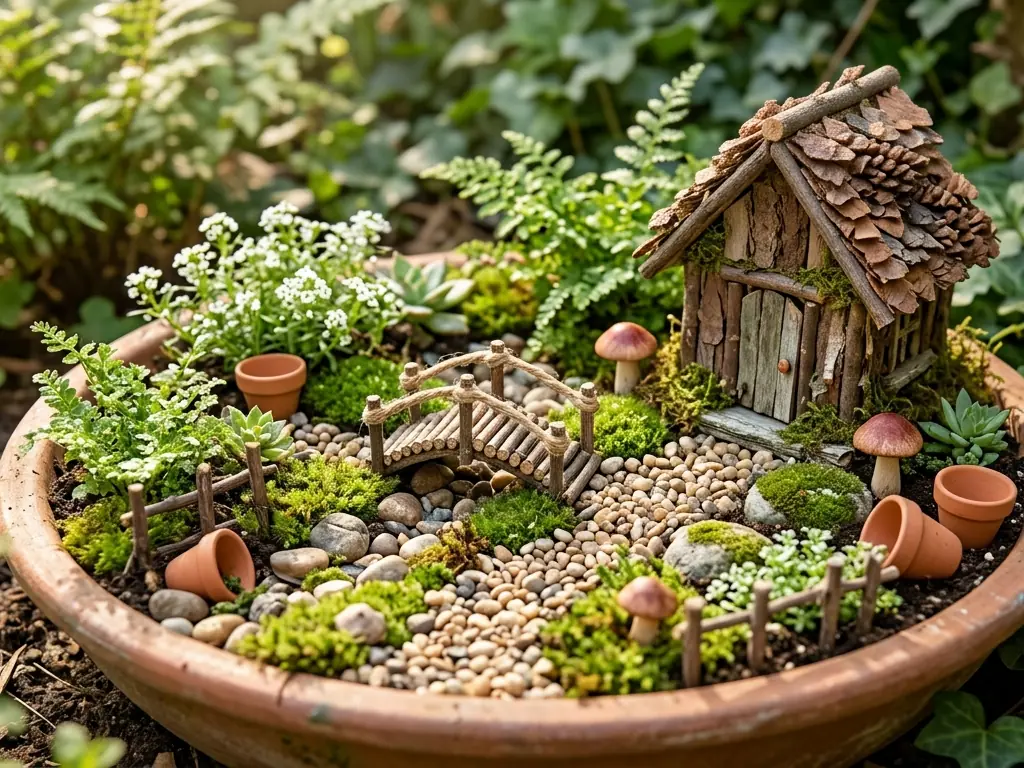
Start with a pot that has suitable drainage for your chosen plants. Add potting mix, then arrange the house and pathway before planting. Leave enough growing room around each plant, and choose varieties that suit the pot’s light and watering conditions.
5. Miniature Fairy Garden Bridge
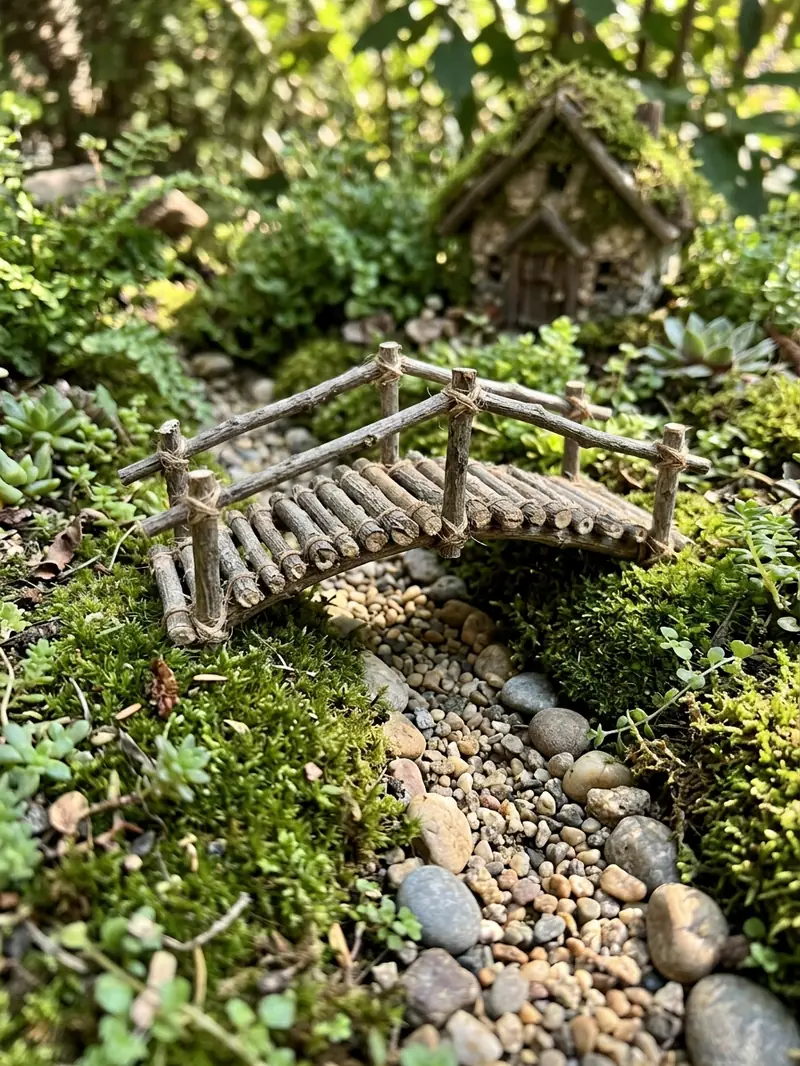
A miniature bridge adds height and visual interest to a fairy garden. It can connect two planted areas or cross a shallow channel filled with pebbles.
Make a simple arch using thin twigs or wooden craft sticks. Secure the pieces with suitable glue and allow them to dry completely. Place the bridge over a dry stone stream for easier maintenance and fewer problems with standing water.
6. Painted Fairy Garden Mushrooms
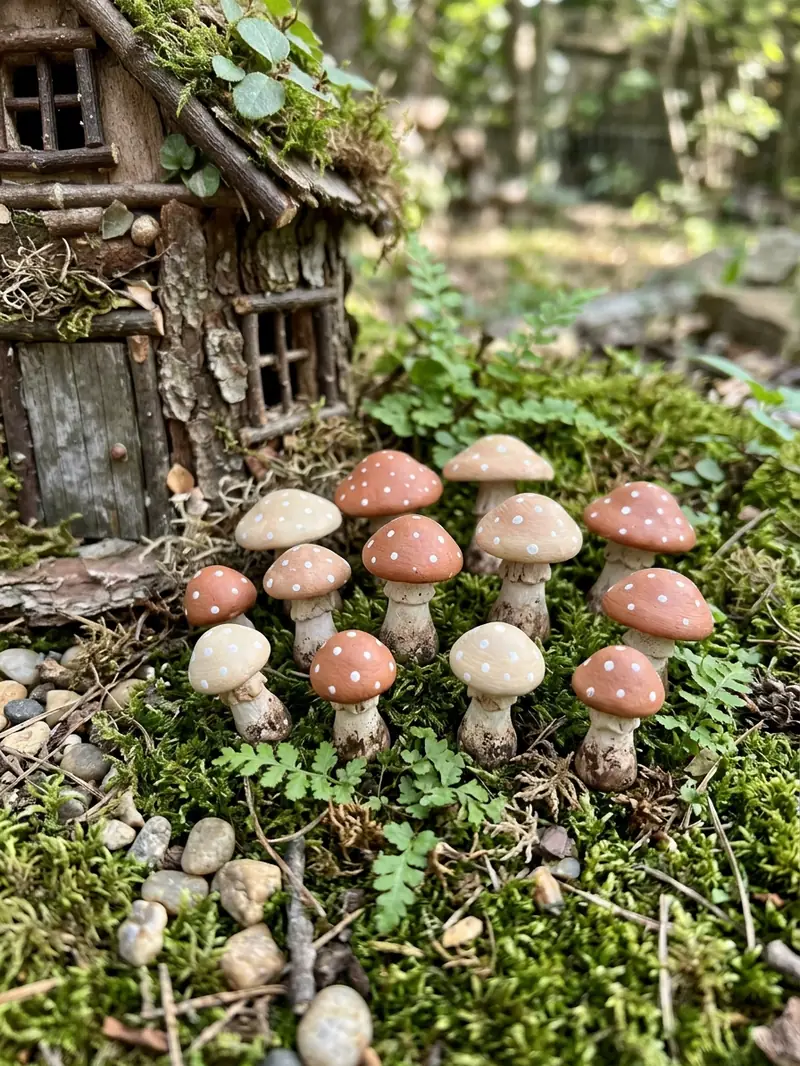
Tiny decorative mushrooms bring a playful woodland detail to miniature gardens. You can shape them from air-dry clay or use small wooden pieces as ready-made bases.
Let clay mushrooms dry according to the manufacturer’s directions before painting them. Add simple dots or curved lines with acrylic paint. For outdoor use, choose a compatible protective finish and remember that decorative mushrooms are not suitable for eating.
7. Fairy Garden Fence From Popsicle Sticks
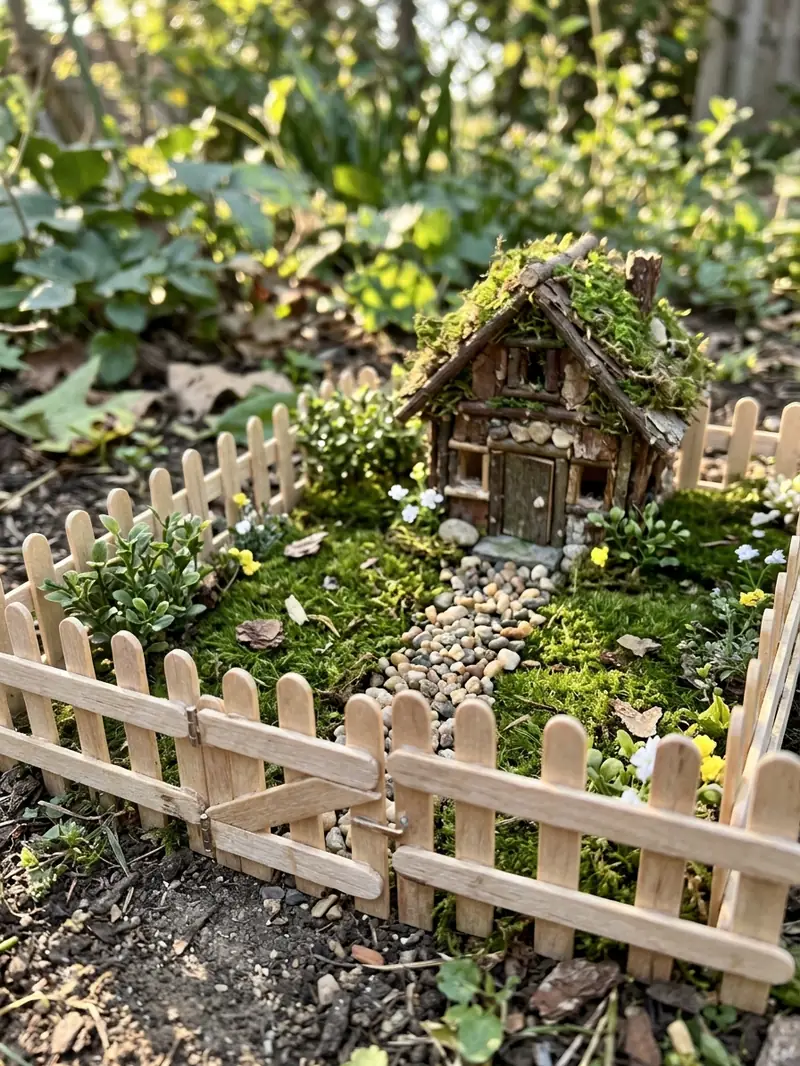
A tiny fence helps separate different areas of your fairy garden. It works well around a cottage, flower bed, or miniature vegetable patch.
Cut craft sticks to your preferred height and connect them with shorter horizontal pieces. Ask an adult to handle any cutting tools used for the project. Leave the fence natural or paint it white, sage green, or soft brown to match your theme.
8. Miniature Fairy Garden Bench
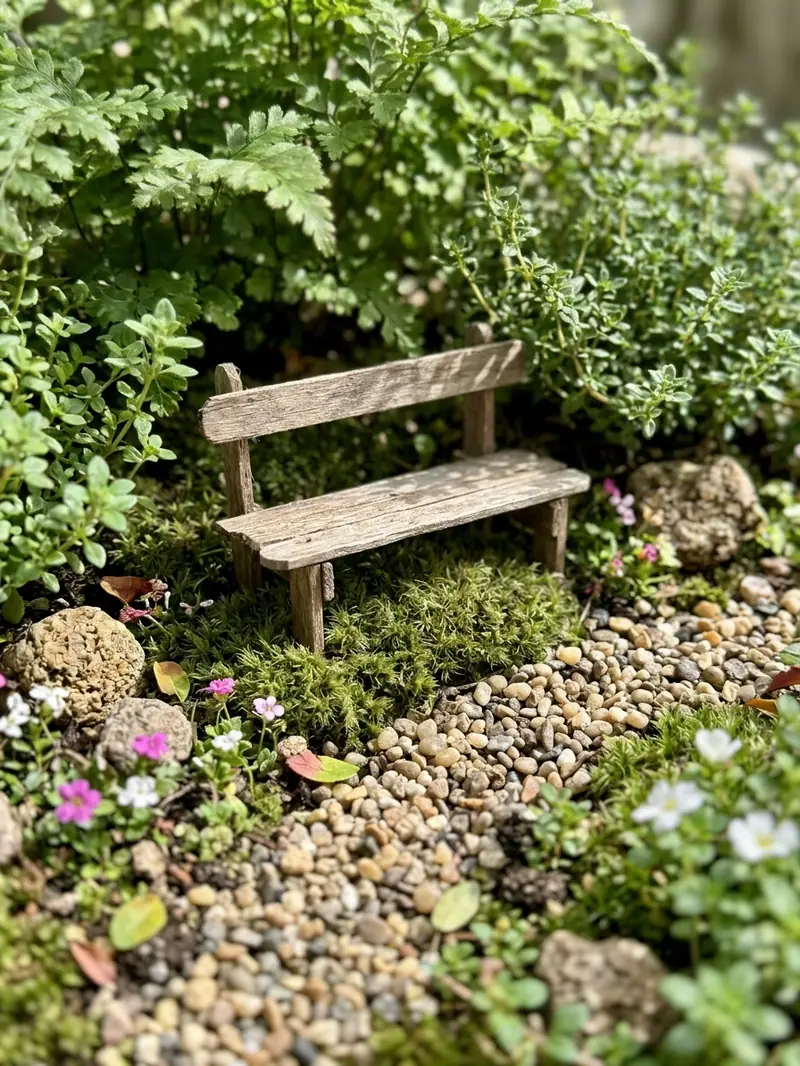
A miniature bench creates a cozy resting spot in your fairy garden. It looks especially inviting beside a small house or beneath a miniature tree.
Use thin craft sticks or small pieces of balsa wood to build the seat and legs. Keep the design simple so the pieces remain stable. A small coat of suitable sealant can help protect the bench from moisture when used outdoors.
9. Fairy Garden With a Miniature Pond
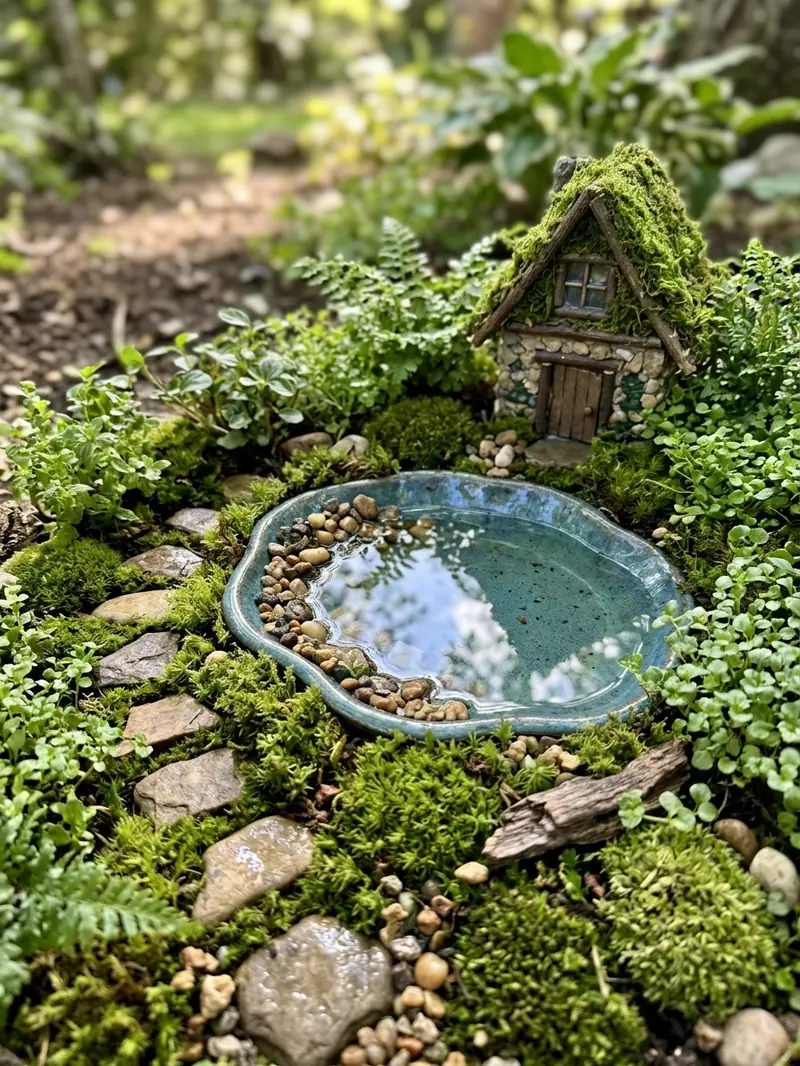
A miniature pond adds a peaceful focal point to a fairy garden. A shallow decorative dish creates the pond effect without requiring complicated construction.
Surround the dish with stones and plants to blend its edges into the landscape. For a low-maintenance design, use blue glass pebbles instead of standing water. If you use real water outdoors, keep it clean and prevent it from becoming a breeding place for mosquitoes.
10. Upcycled Fairy Garden Teacup
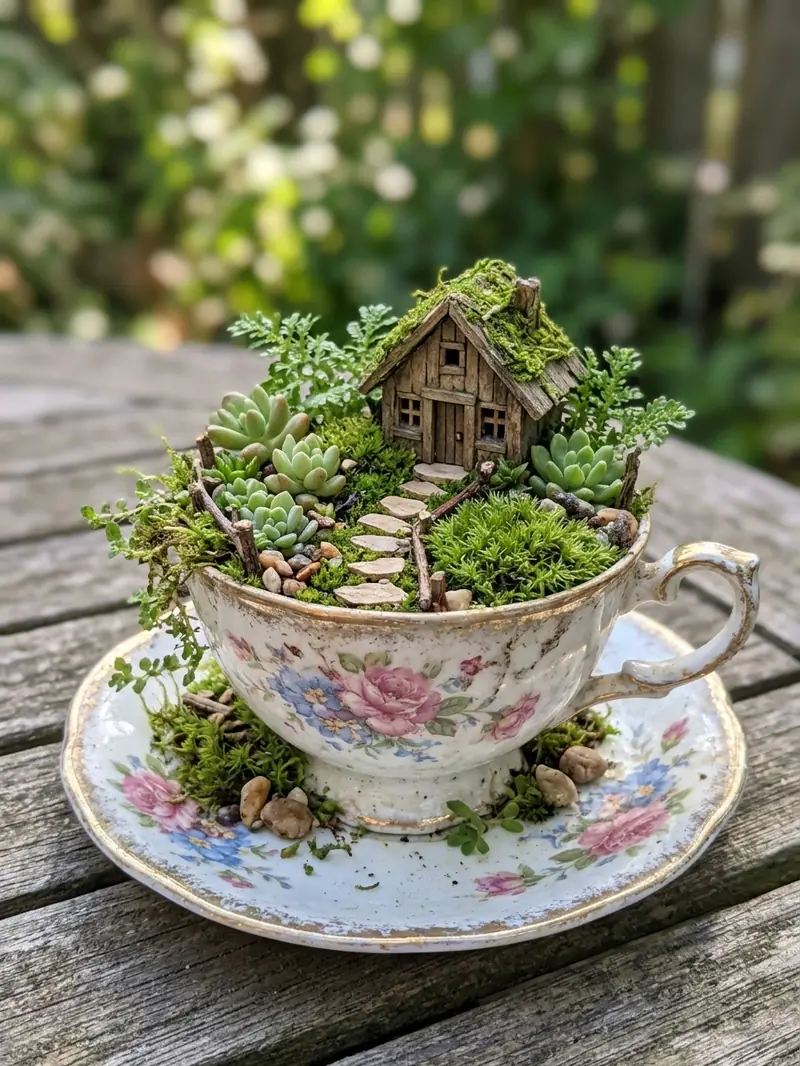
An old teacup can become a charming fairy garden for a table, shelf, or covered patio. This project is especially useful when you want to reuse a chipped cup that is still stable enough to hold decorations.
Add a suitable planting medium if you plan to grow live plants. Check drainage requirements before adding soil, since many teacups lack drainage holes. Alternatively, create a dry arrangement with preserved moss and artificial miniature plants.
11. Fairy House From a Small Clay Pot
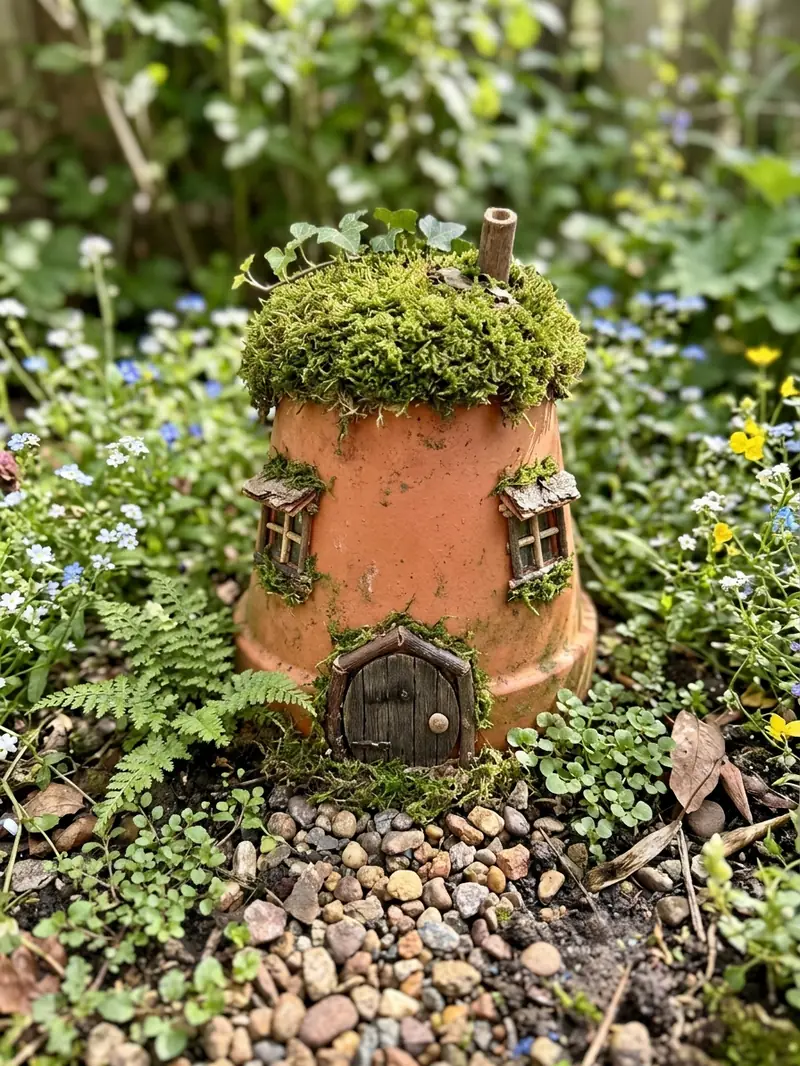
A small clay pot offers a sturdy base for a handmade fairy house. Its rounded shape works well for a simple cottage with a decorated entrance.
Turn the pot upside down and add a miniature door and windows. Use suitable outdoor adhesive for the decorations, following the product instructions. Place the finished house on a stable surface and keep drainage openings clear when the pot is also used for planting.
12. Fairy Garden Stepping Stones
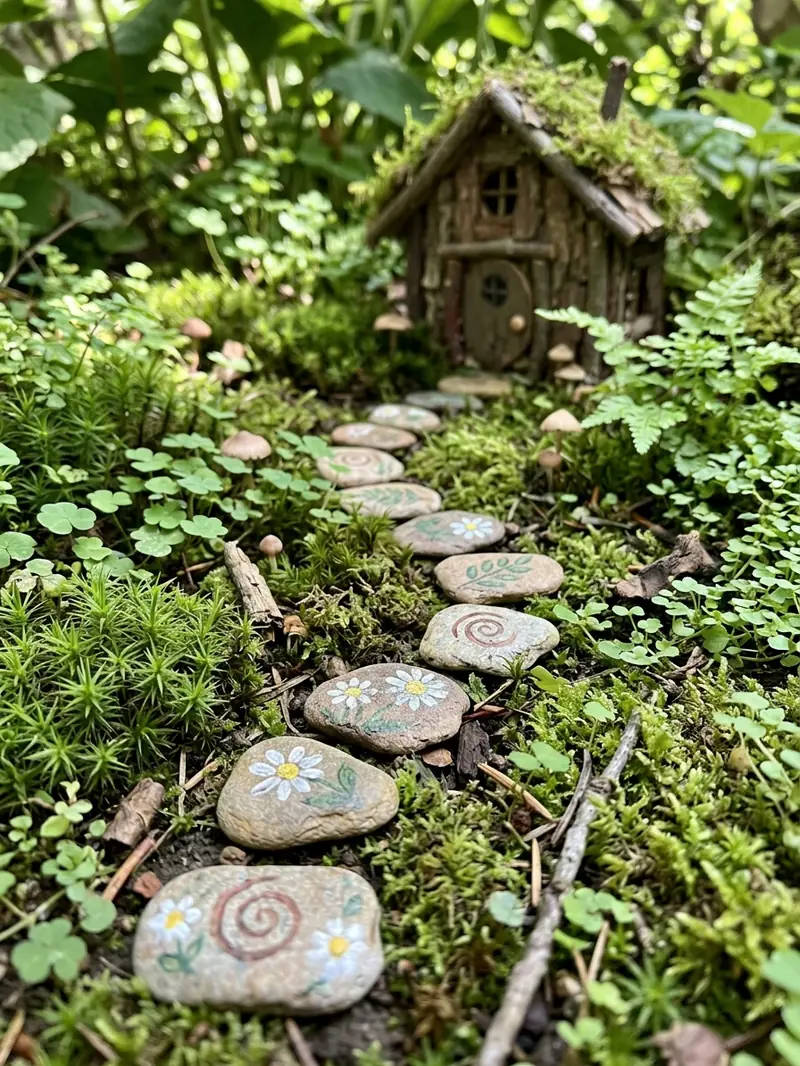
Stepping stones help guide the eye through a miniature garden. They are also an easy way to introduce color without overcrowding the design.
Choose flat stones that sit securely on the soil. Leave small gaps between them and arrange the path around existing plants. You can keep the stones natural or add simple painted details with outdoor-compatible paint.
13. Miniature Fairy Garden Mailbox
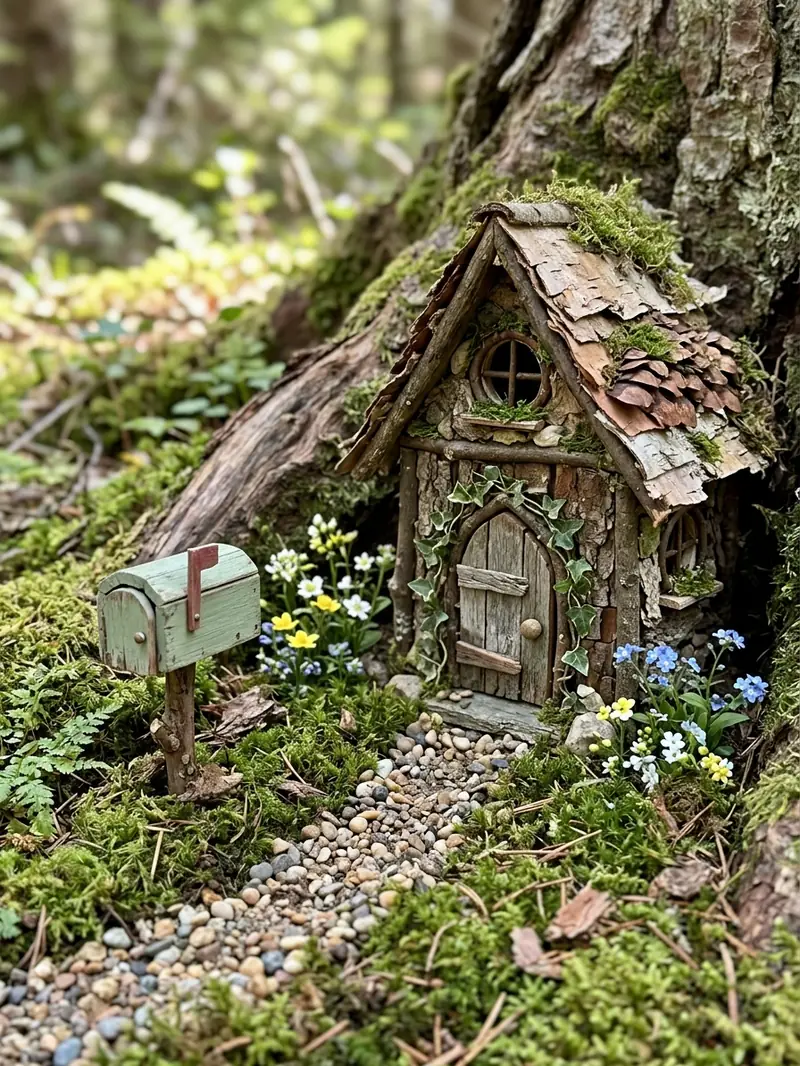
A tiny mailbox adds a storytelling detail to your fairy garden. It can suggest that a fairy family receives letters from other miniature garden residents.
Build the mailbox from small wooden pieces or use a ready-made miniature accessory. Add a little post and a simple opening without making the structure too heavy. Keep the decoration plain or paint it in a color that contrasts with the surrounding greenery.
14. Fairy Garden Lanterns
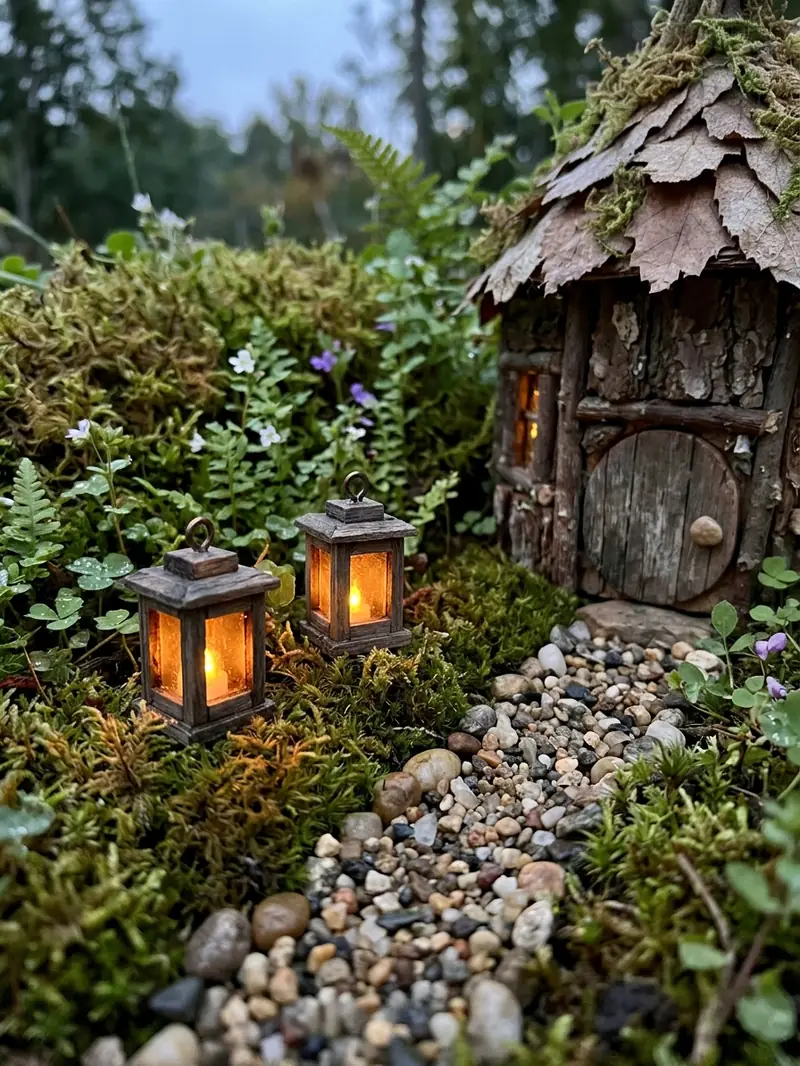
Miniature lanterns make a fairy garden feel cozy, especially around a tiny cottage or pathway. You can create decorative versions using lightweight frames and translucent craft material.
For an outdoor garden, use weather-resistant, non-electrical decorations. If you want actual illumination, choose purpose-made battery-powered miniature lights and follow their instructions. Avoid open flames near dry moss, leaves, or wooden decorations.
15. Fairy Garden With a Miniature Watering Can
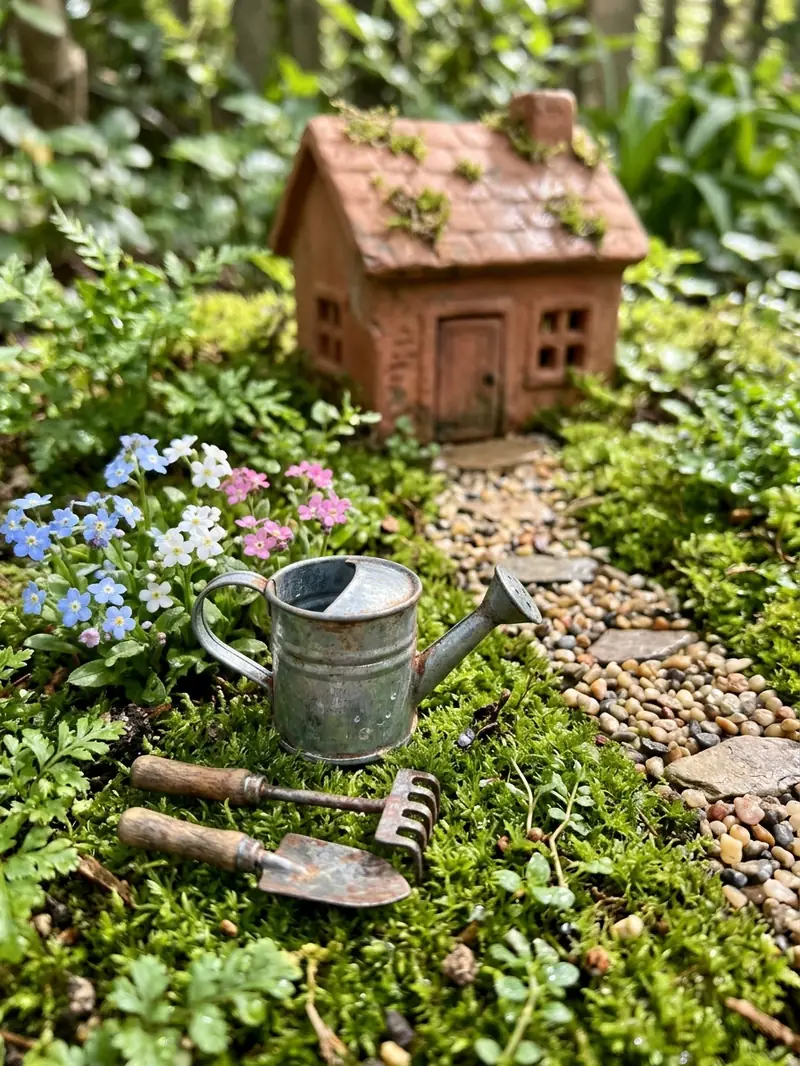
A tiny watering can adds a gardening detail that fits naturally into a miniature landscape. It looks lovely beside a flower bed or outside a fairy cottage.
Use a miniature metal or resin watering can from a craft collection. You can also make a simple decorative version from suitable recycled materials. Position it near small plants so it appears to belong to the scene rather than looking randomly placed.
16. Fairy Garden Mushroom House
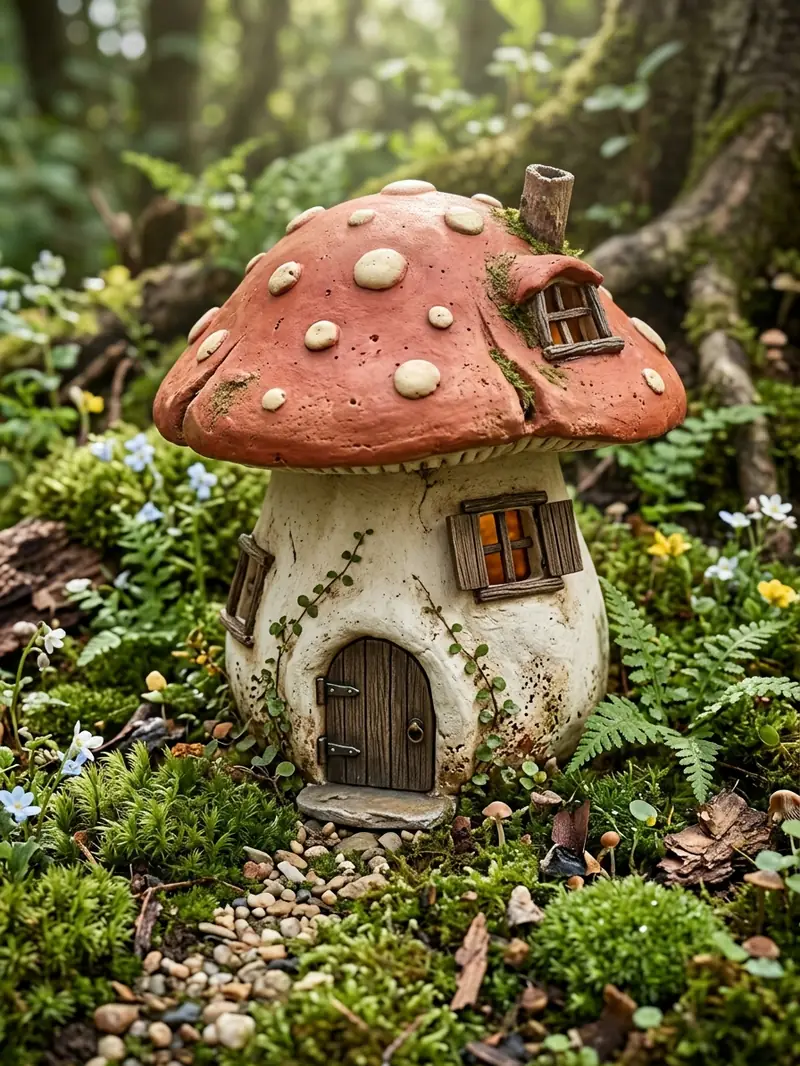
A mushroom house makes a playful centerpiece for a fantasy-inspired garden. Its rounded roof creates a different silhouette from traditional wooden cottages.
Shape the roof from air-dry clay or decorate a small rounded base with painted details. Allow all materials to dry fully before assembling the house. Keep the design simple if you are new to miniature sculpting.
17. Miniature Fairy Garden Wheelbarrow

A miniature wheelbarrow adds movement and a garden-work theme to your display. It can hold tiny flowers, decorative stones, or a small arrangement of moss.
Choose a lightweight wheelbarrow that fits the scale of your other accessories. Place it near the cottage or beside a miniature flower bed. Keep the contents simple so the wheelbarrow remains visible and does not overwhelm the surrounding plants.
18. Fairy Garden With a Tiny Flower Arch
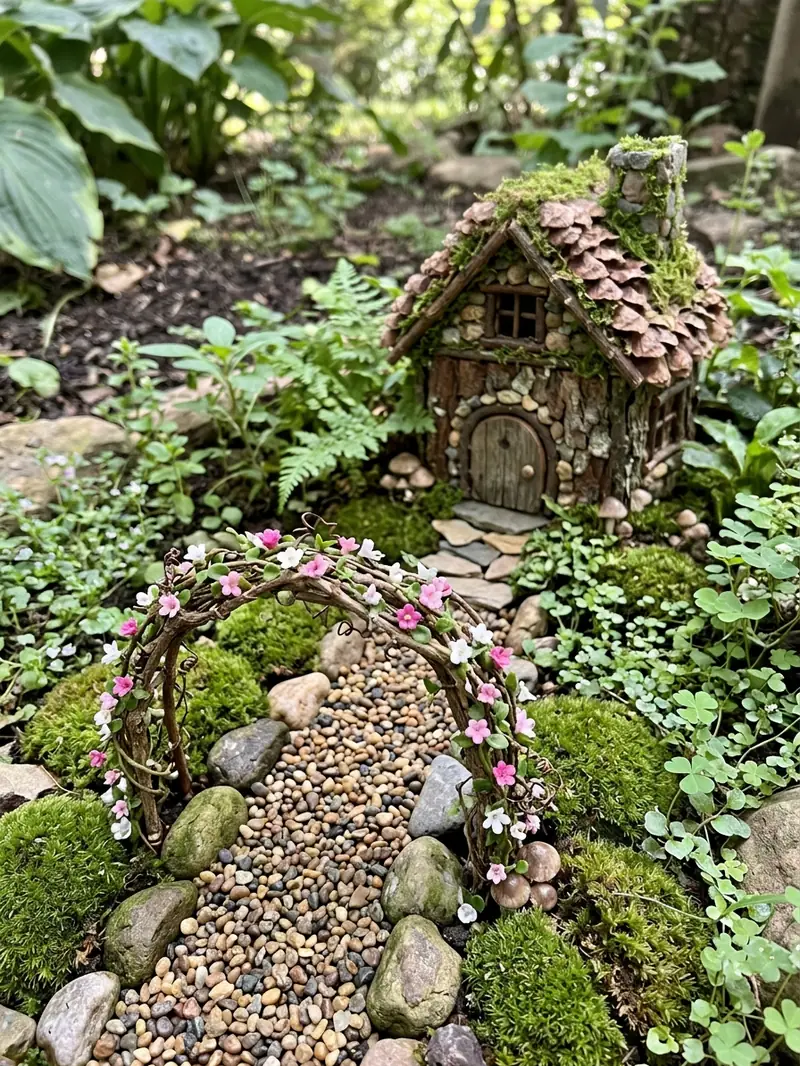
A small flower arch creates a welcoming entrance to a fairy garden. It works especially well when the path leads toward a cottage or hidden seating area.
Bend flexible twigs into an arch and secure the ends in the soil. Add tiny artificial flowers or suitable miniature climbing plants. Make sure the structure stands firmly and does not press against delicate plant stems.
19. Fairy Garden From Broken Plant Pots
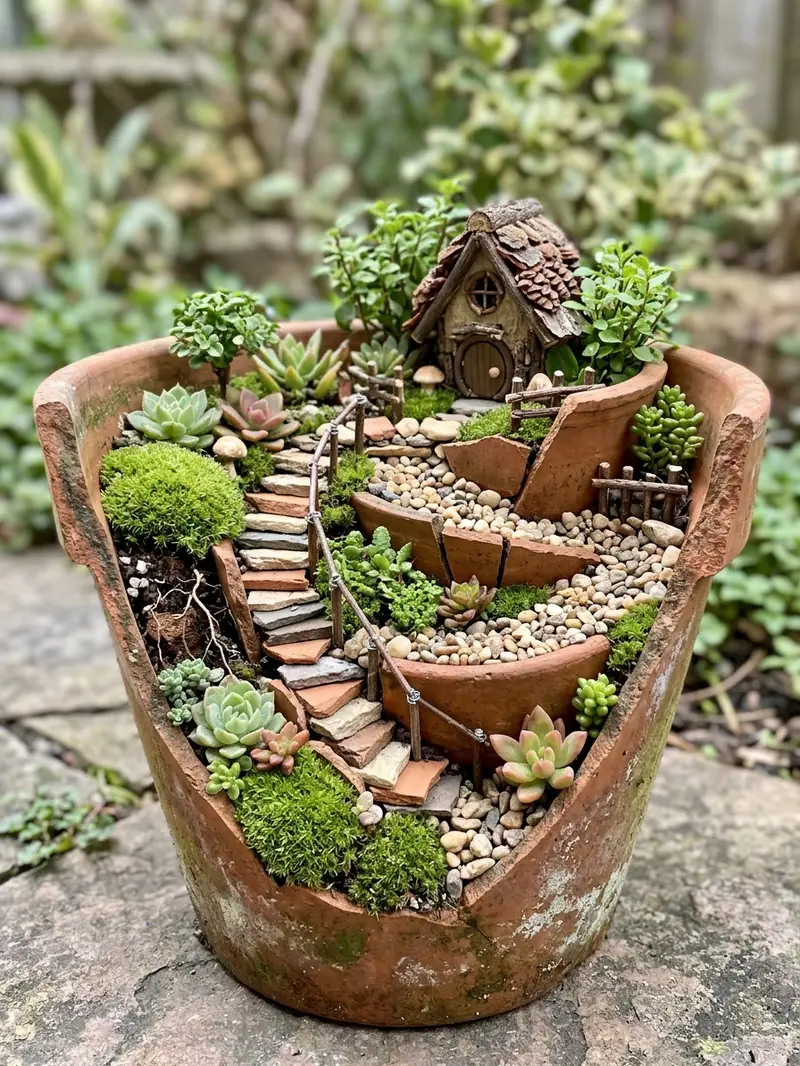
A broken plant pot can become a layered fairy garden instead of going straight into the waste bin. Its uneven sections create natural ledges for tiny plants and decorations.
Arrange the broken pieces carefully so they remain stable. Cover sharp edges with soil or position them away from areas where children may touch them. Add plants, small stones, and a miniature house to connect the different levels.
20. Miniature Fairy Garden Birdhouse
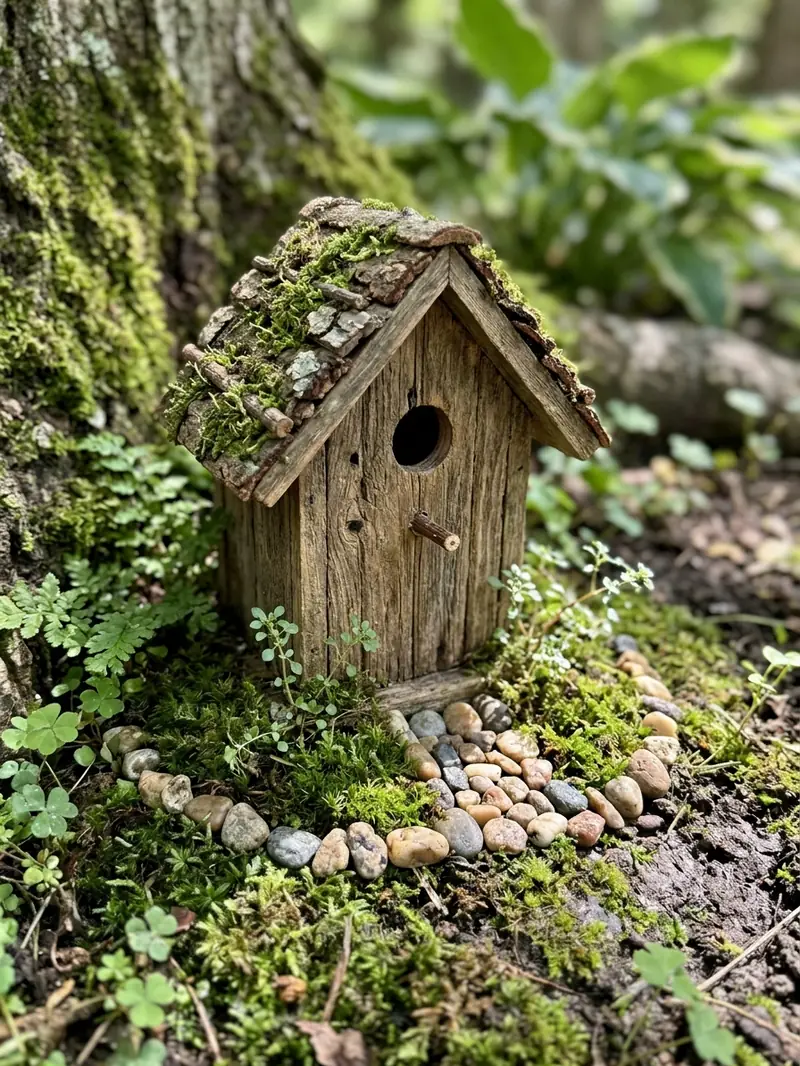
A miniature birdhouse can serve as a second tiny building in your garden. Its simple shape complements cottages, bridges, and other woodland decorations.
Use a small craft birdhouse or build one from thin wooden pieces. Paint it in a muted shade or leave the wood natural. If the item is purely decorative, place it securely among the plants rather than suspending it where wind could knock it down.
21. Fairy Garden With a Miniature Swing
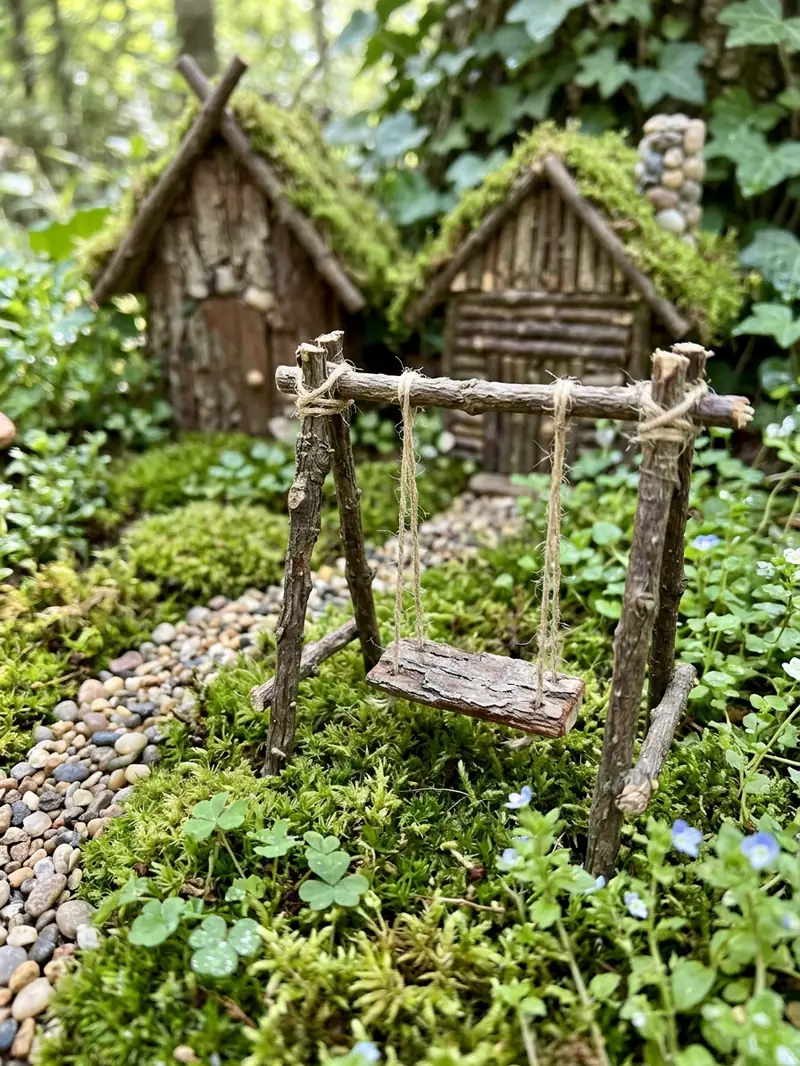
A miniature swing gives your fairy garden a playful focal point. It can sit beneath a small handmade arch or between two sturdy miniature posts.
Make the seat from a small wooden strip and attach it with thin cord. Secure the supporting frame firmly in the soil. Keep the swing decorative, since lightweight craft materials may not withstand outdoor wind or frequent handling.
22. Fairy Garden With a Shell Path
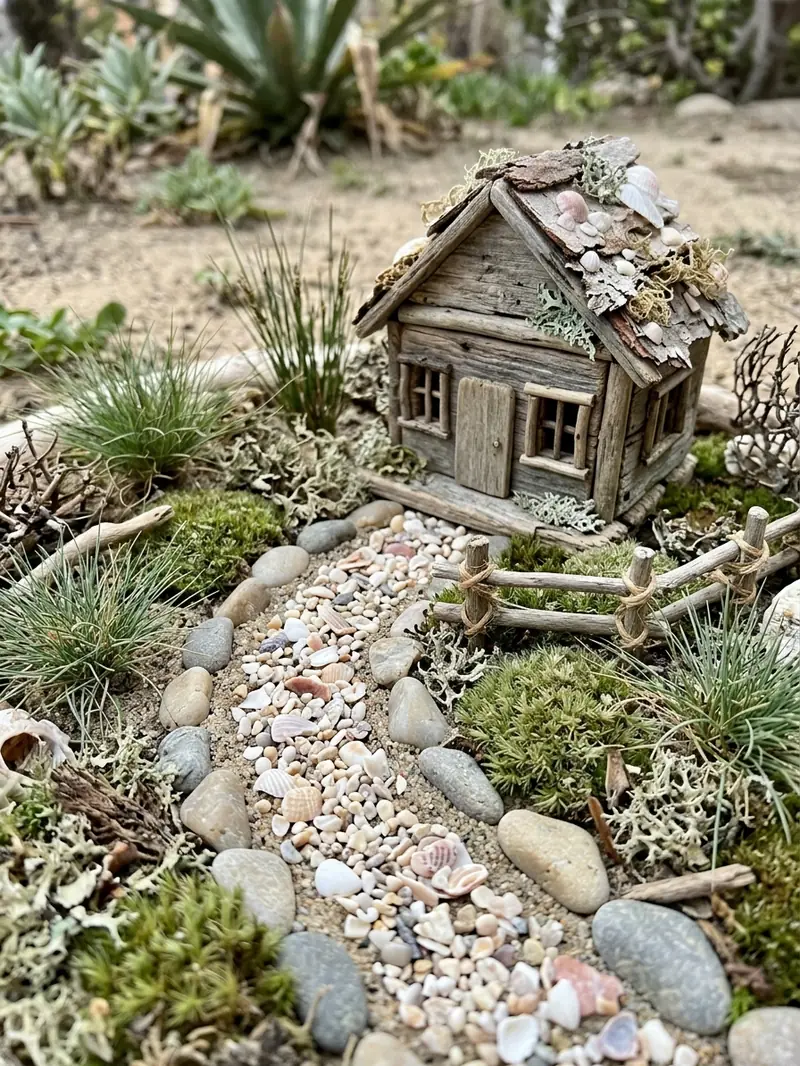
A shell pathway works well in a beach-themed fairy garden. It adds texture and creates a different look from a traditional woodland path.
Use clean, dry shells that fit the scale of your display. Arrange them in a gentle curve and fill gaps with fine pebbles. Avoid collecting shells where local rules prohibit it, and choose purchased craft shells when needed.
23. Fairy Garden From Recycled Tin Cans
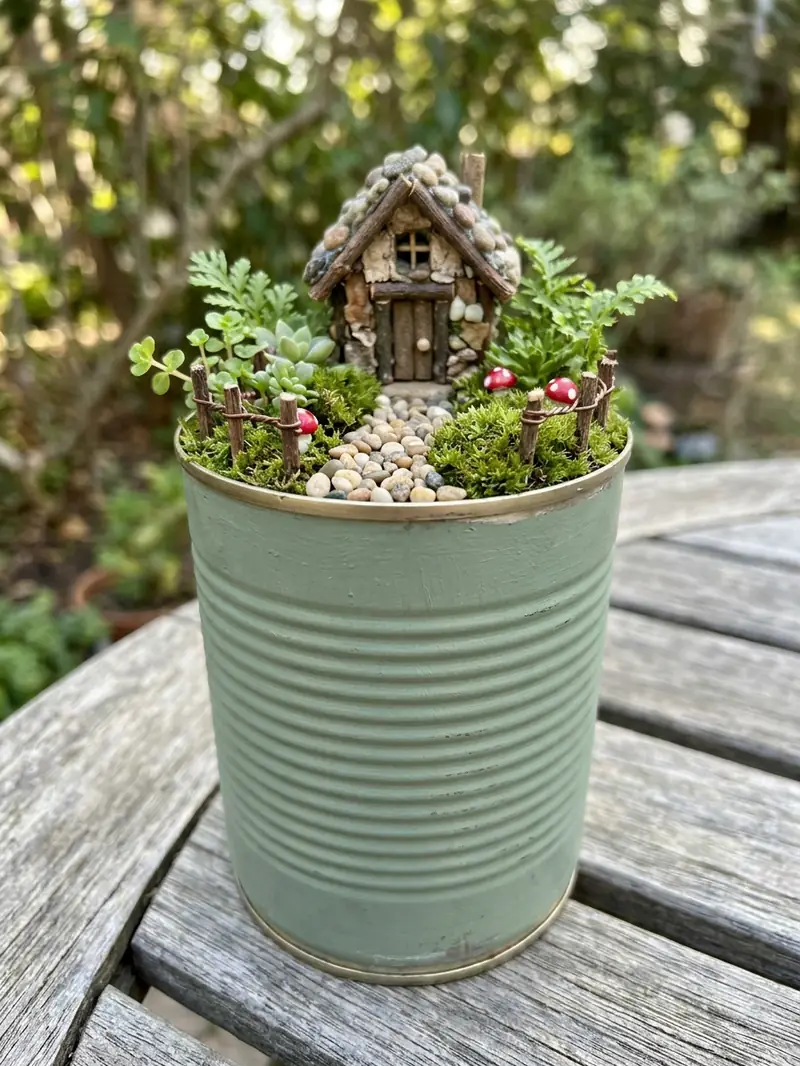
A recycled tin can is a practical container for a small fairy garden. It is a useful option when you want to reuse household materials for a compact craft.
Remove sharp edges and clean the can thoroughly before decorating it. Make suitable drainage holes if you are planting live greenery, and protect exposed metal where needed. Alternatively, use artificial plants for a low-maintenance indoor display.
24. Miniature Fairy Garden Flower Beds
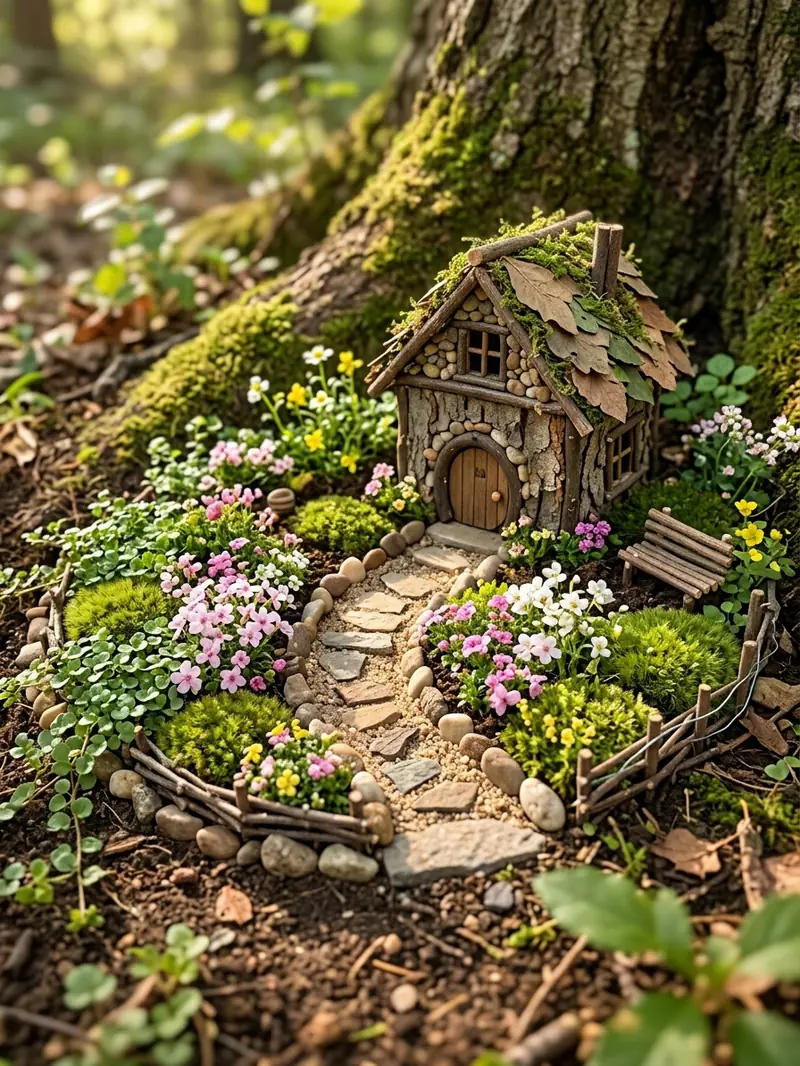
Small flower beds add color and make a fairy garden feel thoughtfully planned. They look best when each planting area has a clear shape and enough space around it.
Use compact plants that suit your container size and local growing conditions. Group similar colors together for a neat look, or mix blooms for a cottage-garden effect. Leave room for growth and avoid overcrowding the miniature pathway.
25. Fairy Garden With a Tiny Stone Well
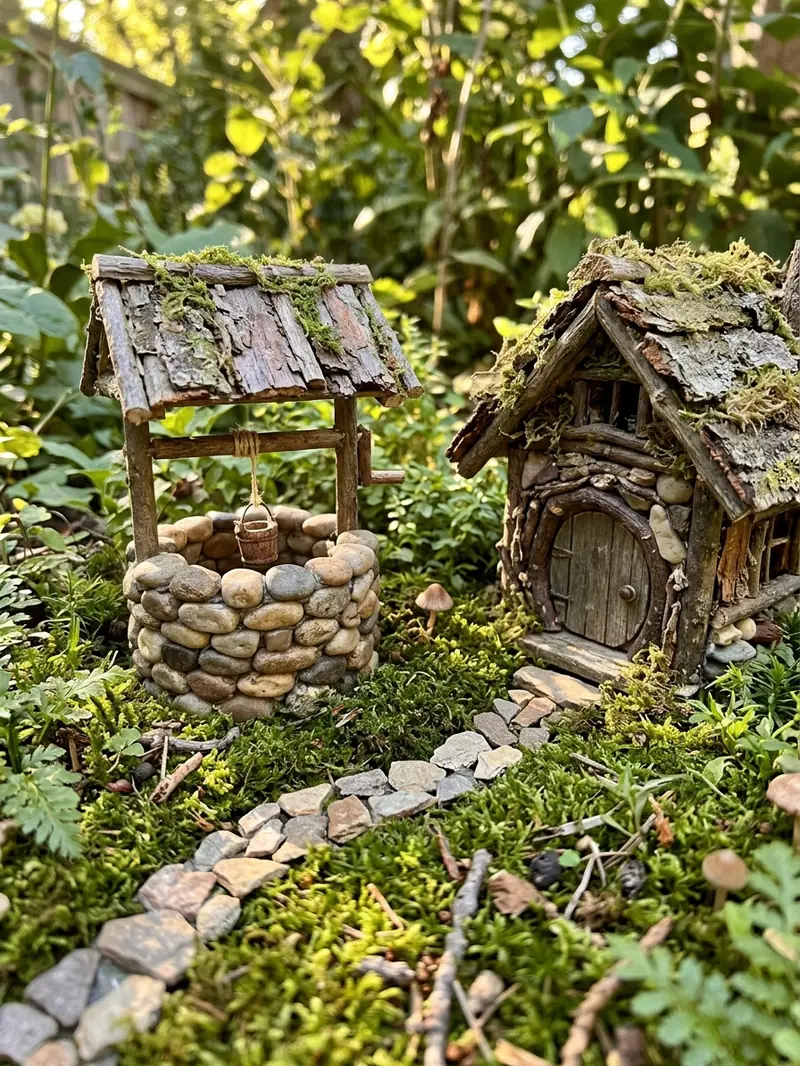
A tiny stone well adds an old-fashioned detail to a fantasy garden. Its rounded shape provides contrast against small cottages and straight wooden fences.
Build the well by arranging small stones into a low circle. Use a suitable adhesive if needed to hold the pieces together. Add a simple roof or wooden crossbar, and keep the opening decorative rather than filling it with standing water.
26. Fairy Garden With a Miniature Treehouse
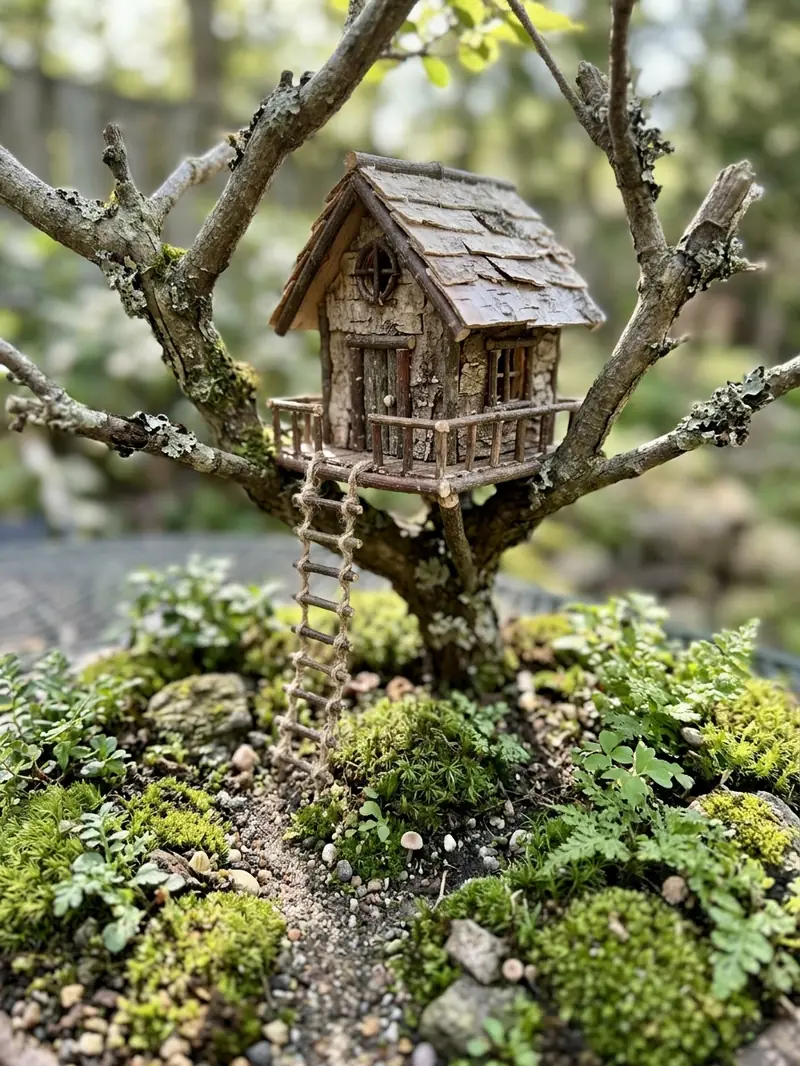
A miniature treehouse adds height to a fairy garden and creates a hidden woodland scene. It can sit on a stable wooden base or among sturdy branches in a large planter.
Build a simple platform from lightweight craft wood and add a small roof. Secure every piece so the structure cannot easily tip over. Keep the design proportional to the garden, leaving enough open space for plants and pathways.
27. Fairy Garden With Painted Wooden Signs
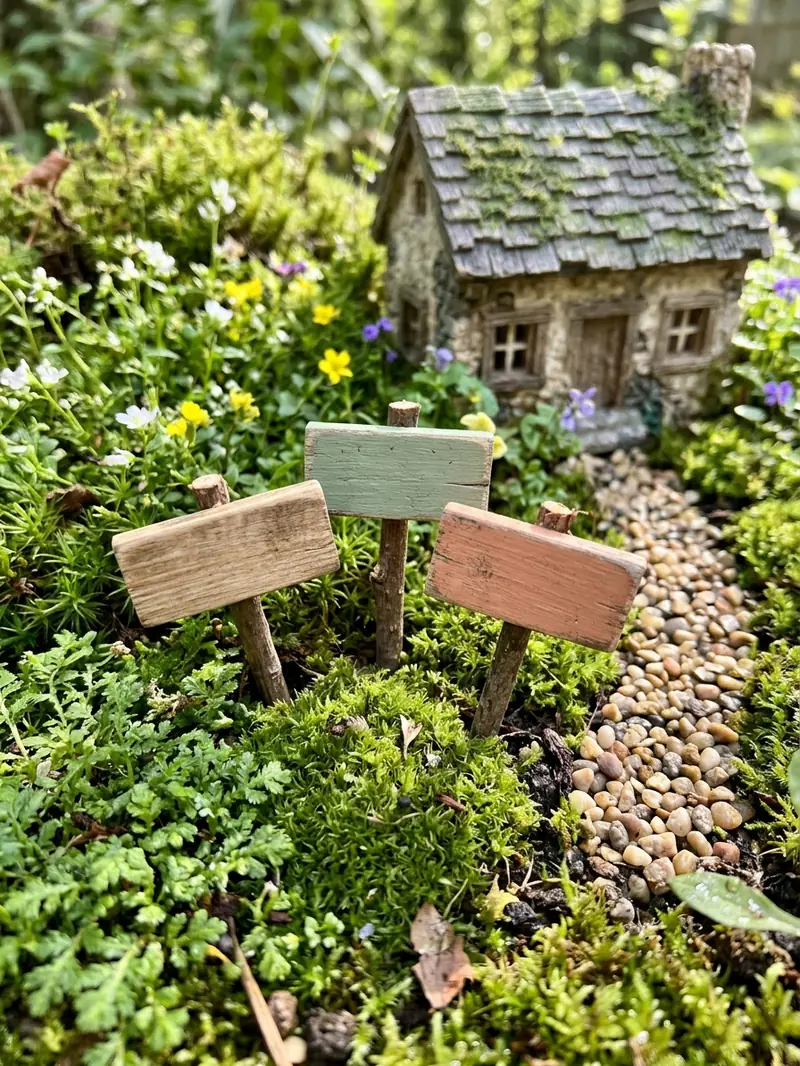
Small wooden signs help divide a fairy garden into different themed areas. They can mark a miniature flower bed, woodland corner, or tiny entrance without taking up much space.
Cut small wooden pieces into simple sign shapes and attach them to short stakes. Leave the surfaces blank for a clean decorative look, or add hand-painted details if desired. For outdoor use, apply a suitable protective finish and check the signs occasionally for weather damage.
28. Miniature Fairy Garden in a Wooden Crate
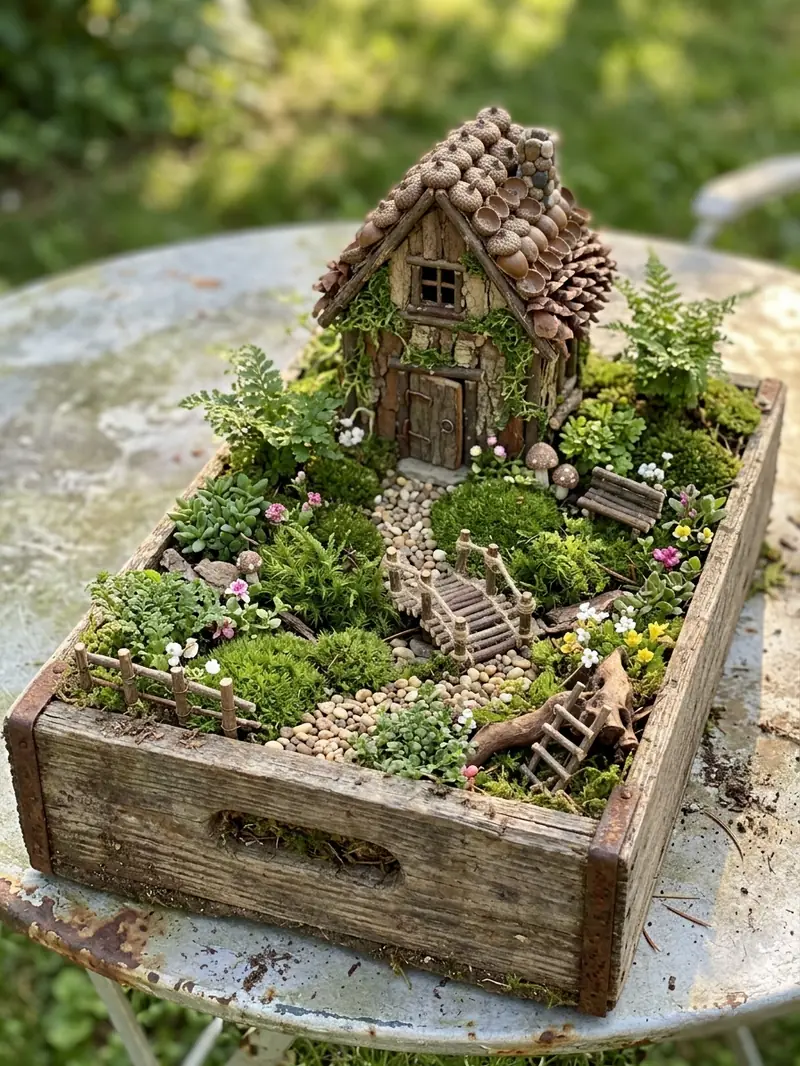
A wooden crate gives you room to combine several fairy garden crafts in one display. Its rectangular shape makes it easier to plan paths, planting areas, and miniature buildings.
Choose a sturdy crate that can safely hold the soil and decorations. Add a suitable liner and drainage arrangement if you plan to grow live plants. Position the tallest house or treehouse toward the back, then place smaller accessories along the path to create depth.
How to Make a Fairy Garden Look Natural
A believable miniature garden needs balance more than lots of decorations. Start with one main feature, such as a cottage, and build the surrounding details around it.
- Choose a theme: Woodland, cottage garden, coastal, and enchanted forest styles are easy to develop.
- Mix textures: Combine wood, pebbles, moss, terracotta, and leafy plants.
- Keep a consistent scale: Choose accessories that look as though they belong in the same miniature world.
- Leave open space: A visible pathway makes the design easier to understand.
- Use different heights: Small bridges, raised beds, and miniature trees add depth.
- Plan for weather: Use suitable outdoor materials if the garden will stay outside.
- Avoid overcrowding: A few carefully arranged decorations often look better than too many tiny objects.
What Materials Do You Need for Fairy Garden Crafts?
You do not need every supply for every project. Choose materials based on the design and whether your fairy garden will be indoors or outdoors.
| Material | Common use |
| Twigs and small branches | Houses, fences, bridges, and arches |
| Small pebbles | Paths, steps, edging, and decorative streams |
| Moss | Ground cover and woodland details |
| Terracotta pots | Planters and miniature houses |
| Air-dry clay | Mushrooms, doors, and small accessories |
| Craft sticks | Benches, fences, and simple structures |
| Acrylic paint | Decorative details on suitable surfaces |
| Miniature plants | Flower beds, shrubs, and ground cover |
| Craft glue | Joining compatible miniature materials |
| Wooden crates or containers | Creating a larger fairy garden display |
Before using a container for live plants, check whether it has suitable drainage. Choose adhesives, paints, and protective finishes according to the materials and their intended use.
Frequently Asked Questions
What are the easiest fairy garden crafts for beginners?
A pebble pathway, a twig fence, a miniature door, and a terracotta-pot garden are good starting points. They require relatively simple materials and do not involve complicated construction.
Can I make a fairy garden without live plants?
Yes. Use preserved moss, artificial miniature plants, pebbles, and decorative accessories. This approach works well for indoor displays and containers without drainage.
How do I make fairy garden decorations weather-resistant?
Choose materials designed for outdoor use and follow the instructions for any paint, adhesive, or sealant. Natural materials can still fade, crack, or deteriorate, so inspect decorations regularly.
What can I use instead of buying miniature fairy garden accessories?
Twigs, small stones, craft sticks, recycled containers, and suitable leftover wood can become simple decorations. Clean recycled materials before using them, and avoid pieces with sharp edges.
Where should I place an outdoor fairy garden?
Choose a location that suits the plants and materials you use. A sheltered garden corner, suitable planter, or protected patio can work well. Check sunlight, drainage, and exposure to heavy rain before choosing the final spot.
Create Your Own Whimsical Fairy Garden
Fairy garden crafts let you turn simple materials into a miniature world filled with tiny houses, winding paths, and handmade details. Start with one project that fits your space, then add new features as your garden grows.
Ready to create your own little woodland escape? Pick your favorite idea, gather your materials, and explore more DIY inspiration on CraftedMode.
Keep exploring CraftedMode for more garden craft ideas, home decor ideas, fun crafts for kids, and easy DIY crafts.