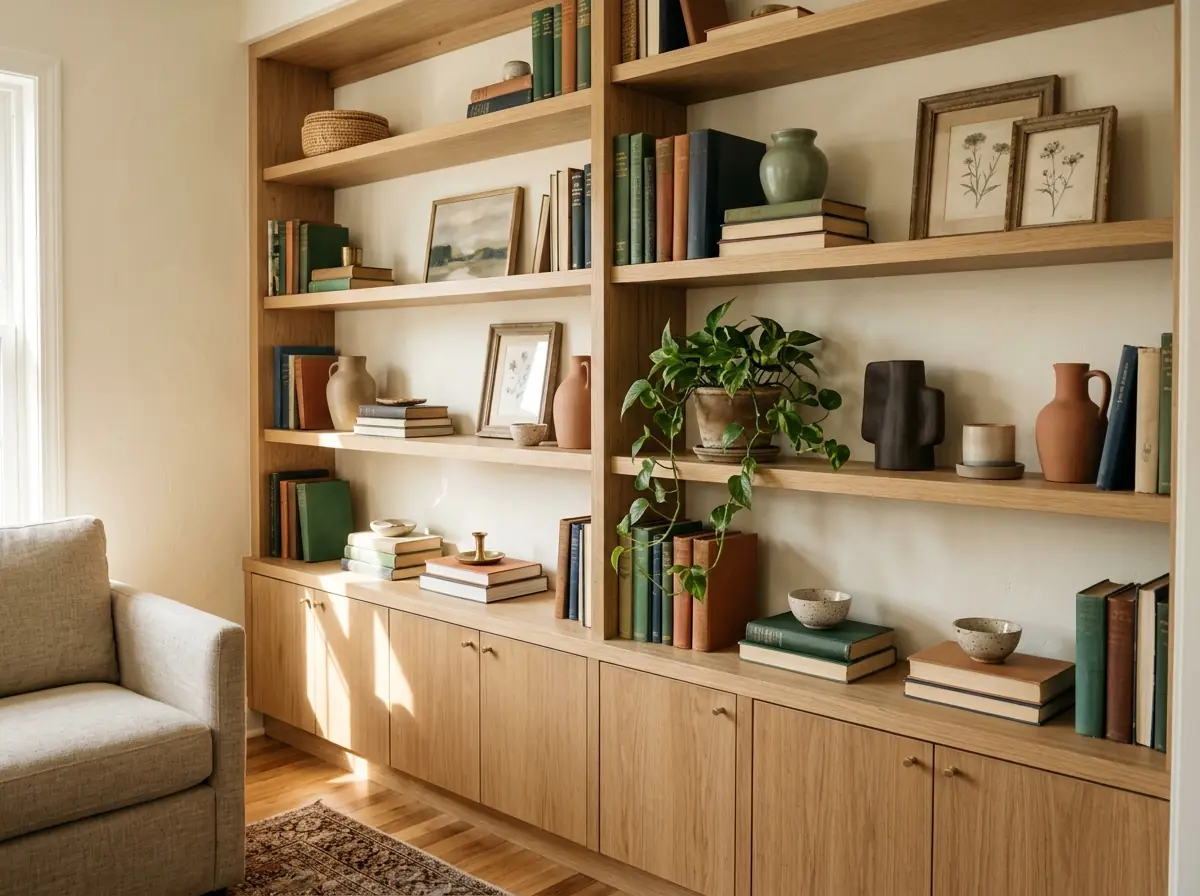
A well-styled bookshelf can make a room feel finished without replacing your furniture. These bookshelf styling ideas combine books, artwork, plants, ceramics, and personal pieces in simple ways. You can adapt them to a living room, bedroom, office, or reading nook.
The best arrangements balance function with visual interest. Keep books easy to find, vary heights and textures, and leave enough breathing room around your favorite pieces. Below are 27 ideas to help you create a bookshelf that feels personal, warm, and thoughtfully arranged.
Planning more projects? You may also like our creative jar crafts for DIY home projects and handmade gift ideas for every occasion.
27 Stunning Bookshelf Styling Ideas for a Beautiful Home
These ideas show simple ways to combine books, decor, color, texture, and personal details on almost any bookshelf.
1. Mix Vertical Books With Horizontal Stacks
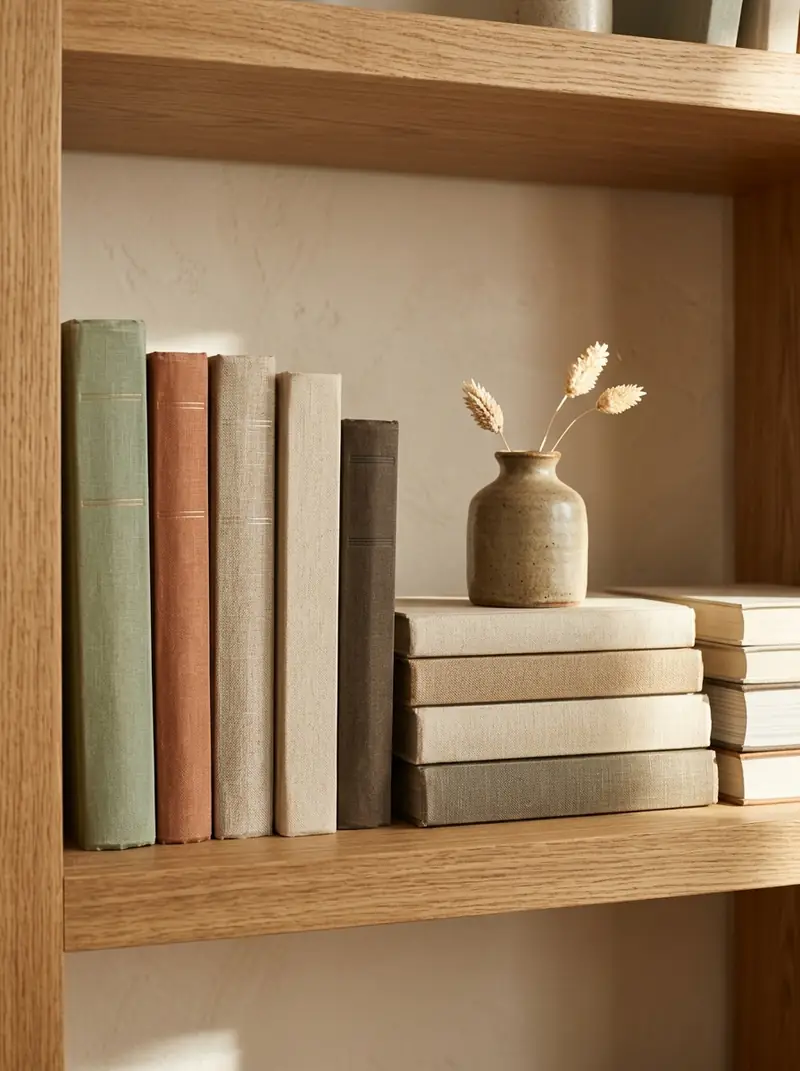
Vertical rows can make a shelf look orderly, but too many rows may feel repetitive. Break them up with short horizontal stacks for a more relaxed arrangement.
Place a small object on top of one stack to create another height level. This works especially well with vases, small sculptures, candles, or framed photographs.
2. Arrange Books by Color
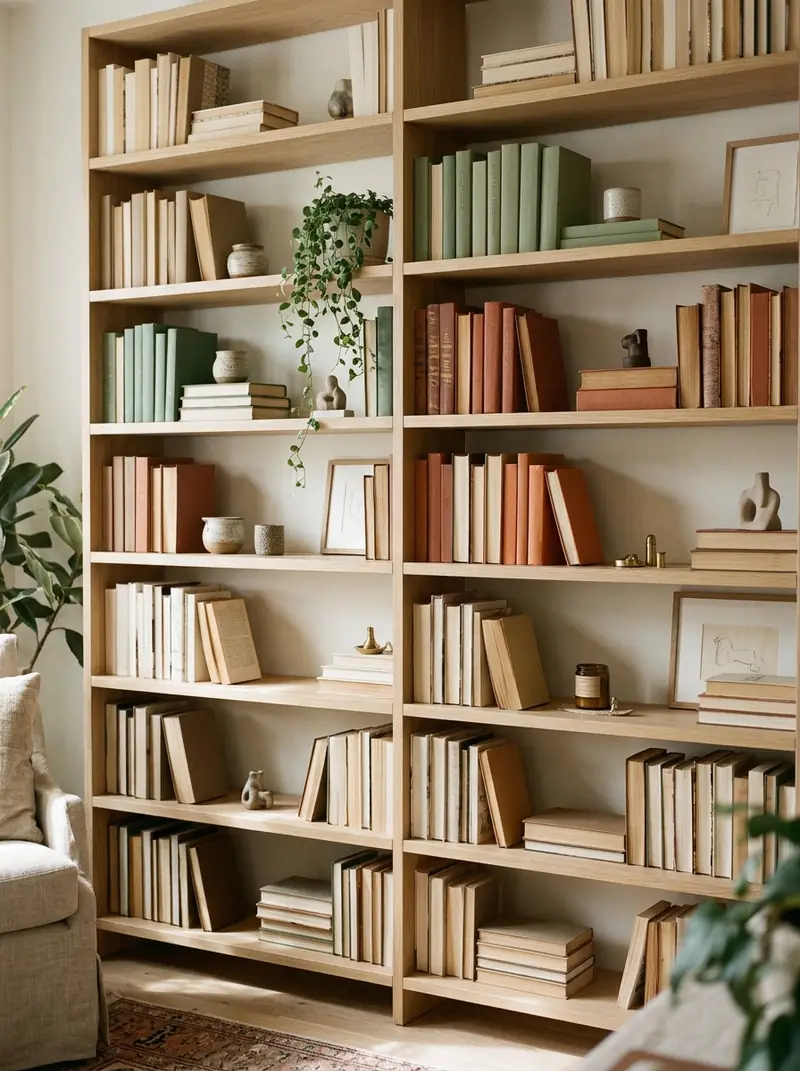
Grouping books by spine color creates an immediate visual rhythm. You can use a full rainbow arrangement or a smaller palette that matches your room.
Do not worry about perfect color matching. Loose color families often look more natural and still create a coordinated display.
3. Add Greenery Between Book Groups
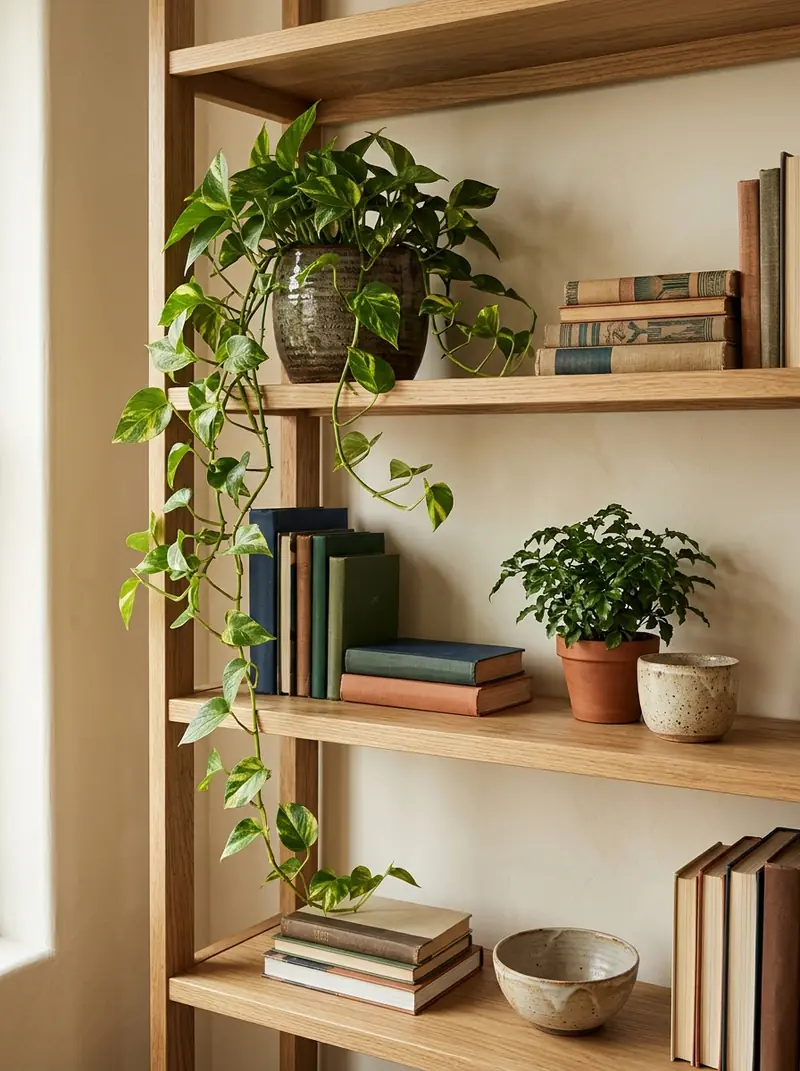
Plants bring softness to shelves filled with hard book covers and wooden surfaces. Small plants work well when shelf depth is limited.
Try trailing greenery on an upper shelf or a compact plant on a horizontal book stack. Choose plants based on the available light and how often you can care for them.
4. Lean Framed Art Against the Back
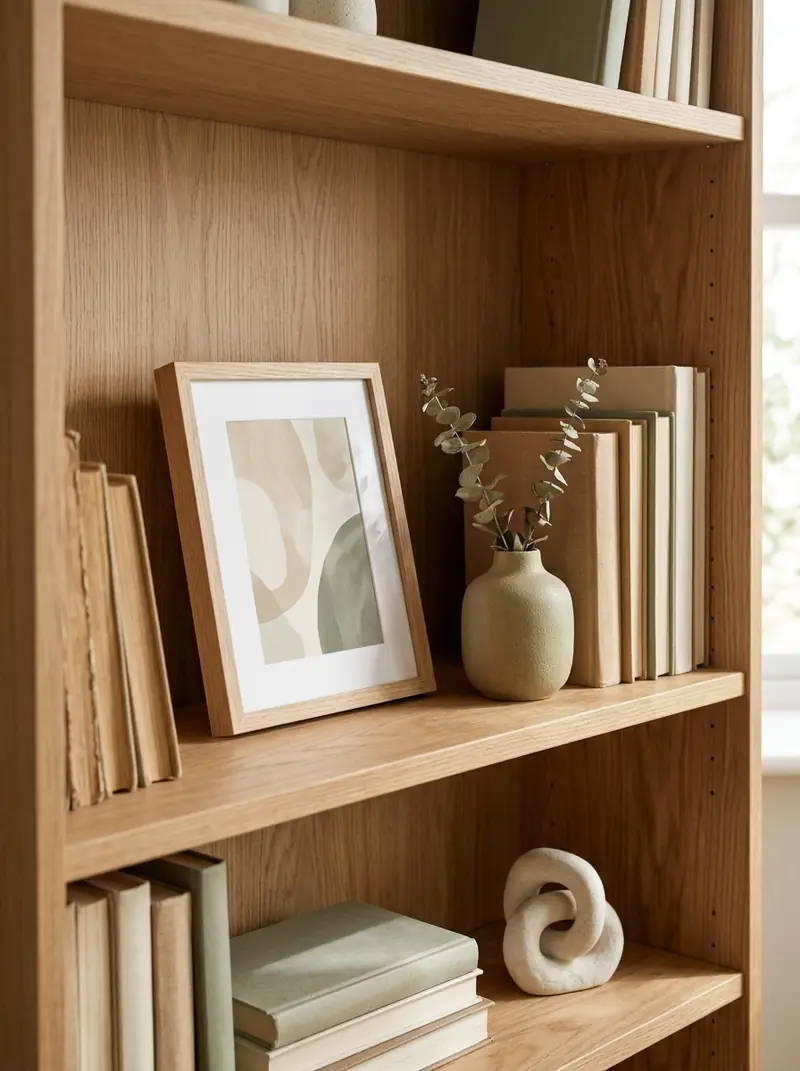
A leaning frame adds depth without requiring wall mounting. It also helps fill awkward spaces behind shorter decorative objects.
Use one larger frame as an anchor instead of covering every shelf with artwork. Keep the frame slightly overlapping nearby books for a layered look.
5. Display a Favorite Collection

A bookshelf can showcase more than books. Display pottery, travel souvenirs, small sculptures, shells, cameras, or another meaningful collection.
Keep similar pieces together so the collection feels intentional. Leave some books nearby to keep the arrangement connected to the purpose of the shelf.
6. Use a Large Vase as an Anchor
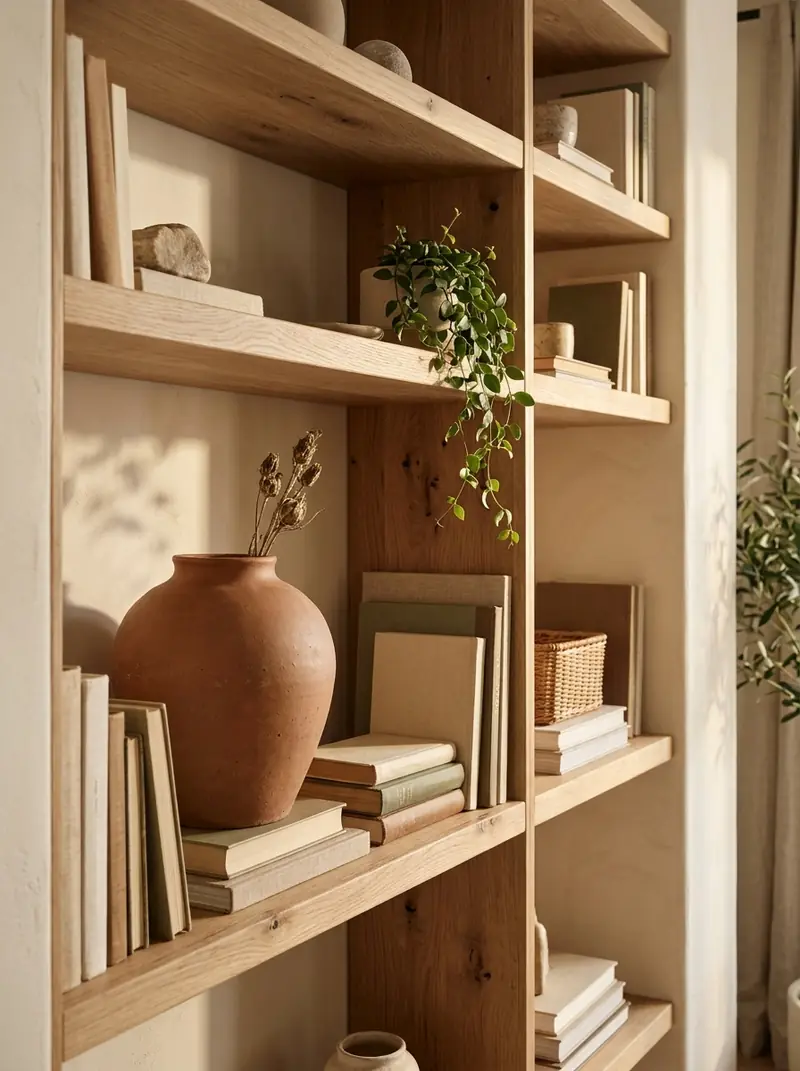
One larger object can give a shelf a clear focal point. A vase, sculpture, or substantial bowl can work especially well.
Place smaller pieces around it rather than filling the entire shelf. This keeps the display from feeling like a collection of unrelated objects.
7. Create a Cozy Reading Shelf
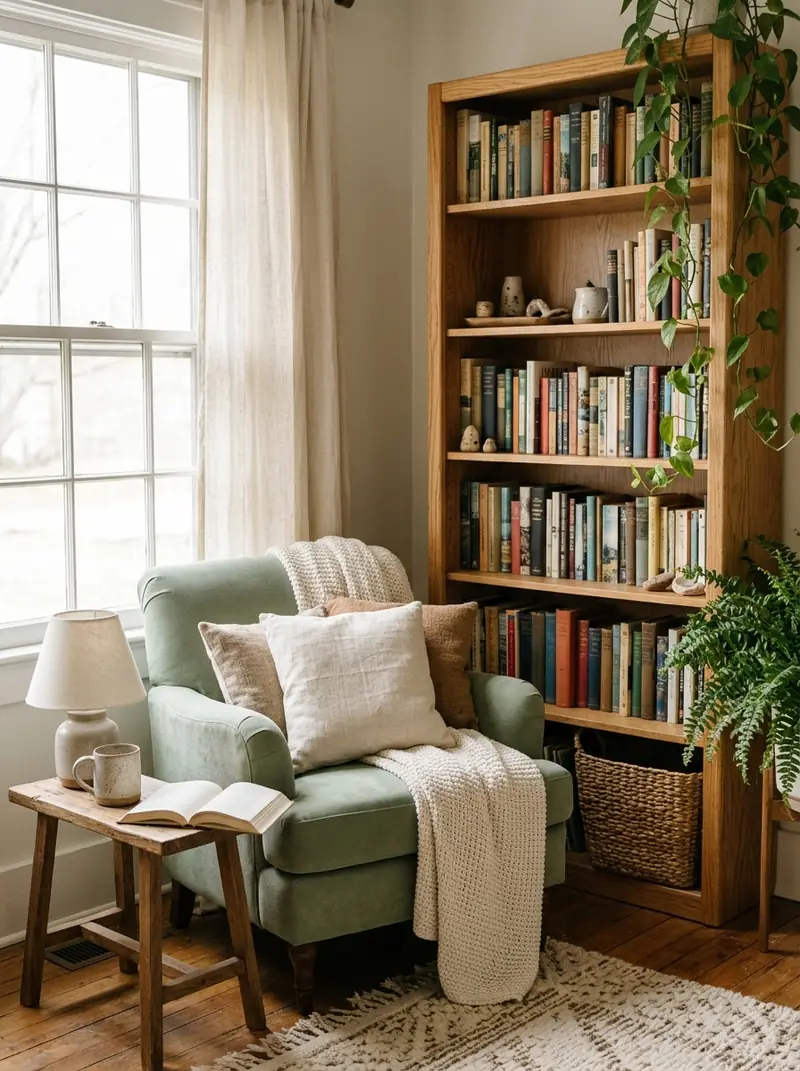
Turn part of your bookcase into a dedicated reading zone. Group favorite novels together and add a small lamp or reading accessory nearby.
A woven basket on the bottom shelf can hold blankets or magazines. The result feels useful rather than purely decorative.
8. Layer Small Artwork in Front of Books
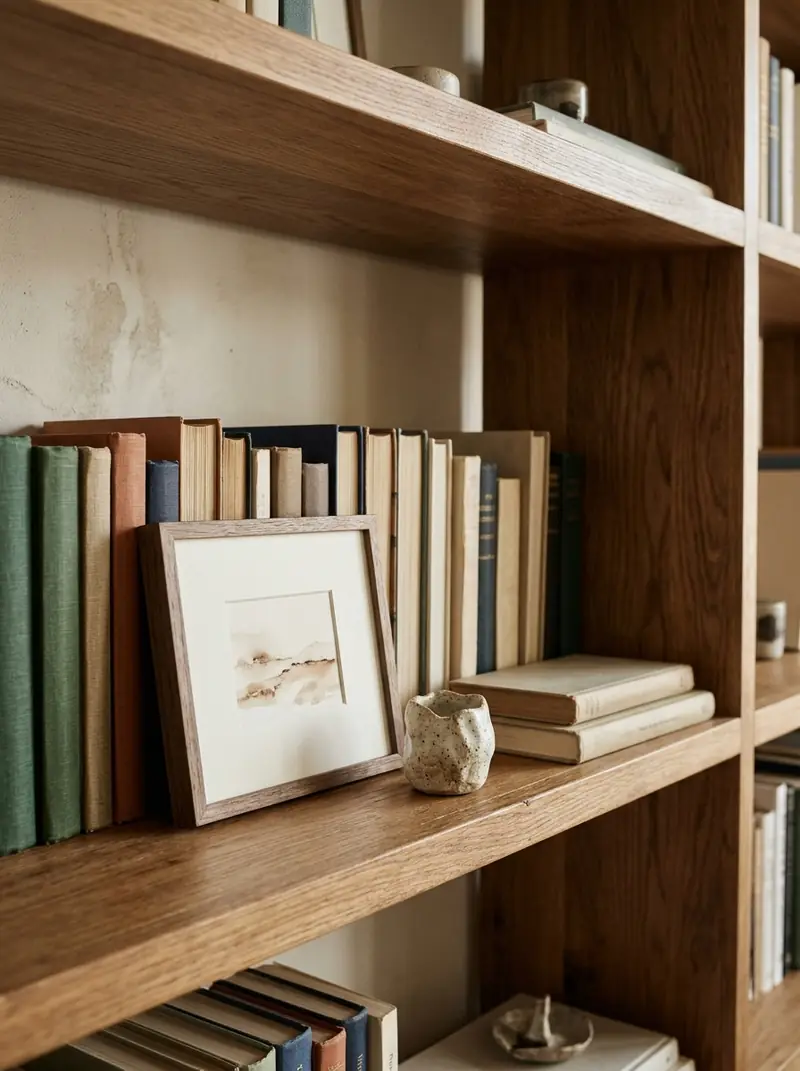
Layering creates depth when your shelves look too flat. Place a small frame in front of books instead of leaving every item side by side.
Make sure the artwork does not hide important book titles. This approach works best with books you do not need to access every day.
9. Use Bookends as Decor

Bookends can become part of the decoration instead of disappearing behind your books. Look for simple materials such as wood, stone, ceramic, or metal.
Choose a pair that complements your existing shelf colors. A sculptural shape can add interest without taking up much space.
10. Add Woven Baskets to Lower Shelves
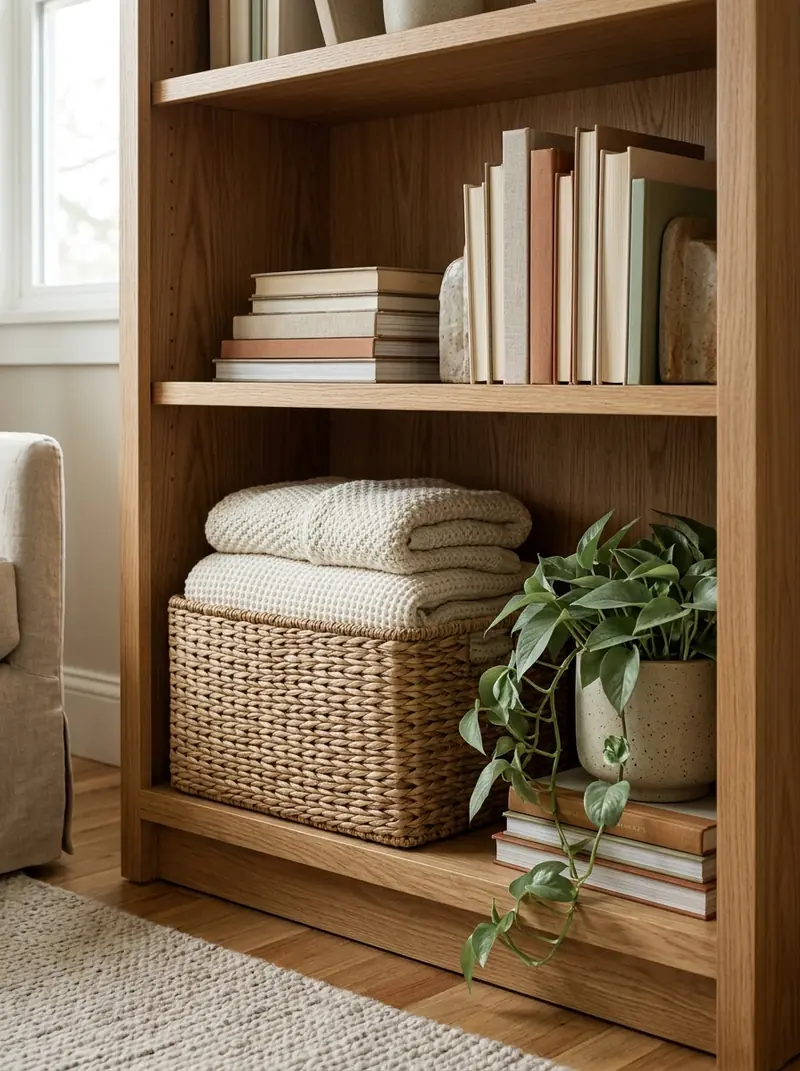
Lower shelves are useful for storage because they are less visible from eye level. A woven basket can hide small items while adding natural texture.
Use baskets for blankets, magazines, craft supplies, or children’s books. Choose a size that fills the shelf without pressing against nearby books.
11. Style a Shelf With Travel Memories
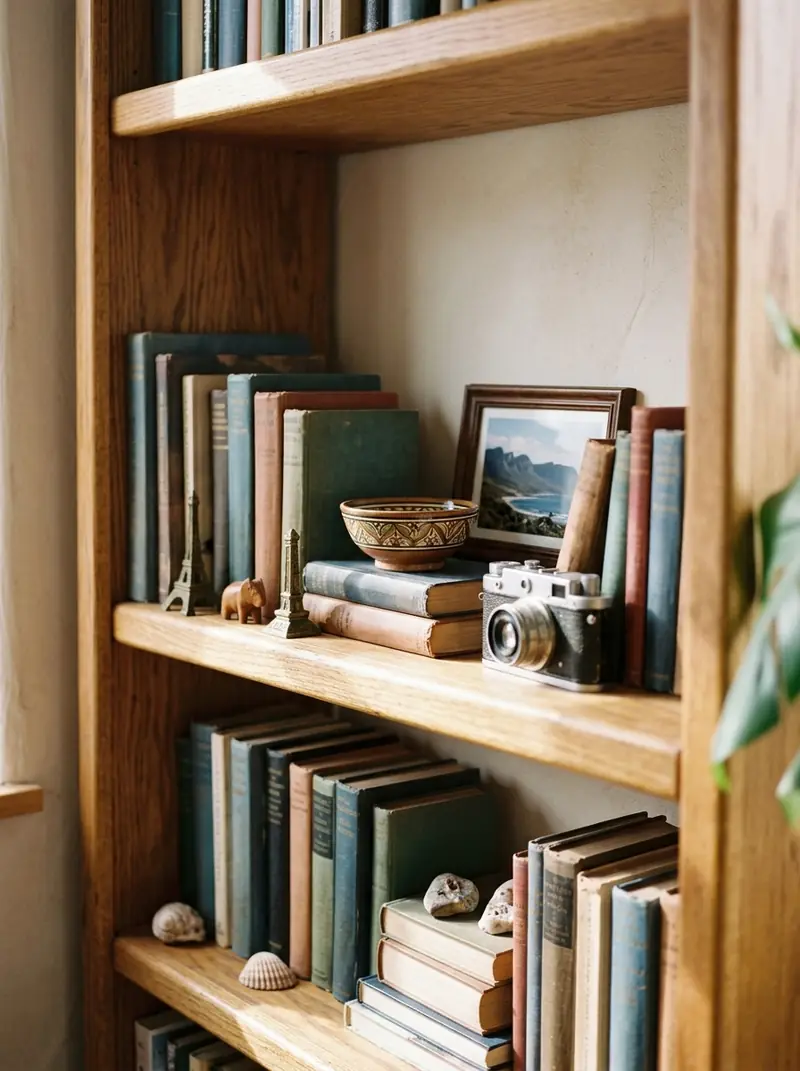
Travel keepsakes can make a bookshelf feel personal. Mix them with books about places you have visited or subjects you enjoy.
Use only a few meaningful pieces on each shelf. Too many small souvenirs can quickly make the arrangement feel crowded.
12. Try a Neutral Bookshelf Palette

A neutral palette creates a calm and flexible bookshelf display. Cream, beige, brown, and muted green work especially well with natural wood.
You can keep colorful book spines while balancing them with neutral accessories. This approach works well in minimalist and cozy interiors.
13. Create an Eclectic Bookshelf

An eclectic shelf does not need every item to match. The goal is to create a connection through repeated colors, materials, or shapes.
Mix old and new pieces for a collected appearance. Keep one or two visual elements consistent so the arrangement still feels balanced.
14. Group Books in Small Color Blocks
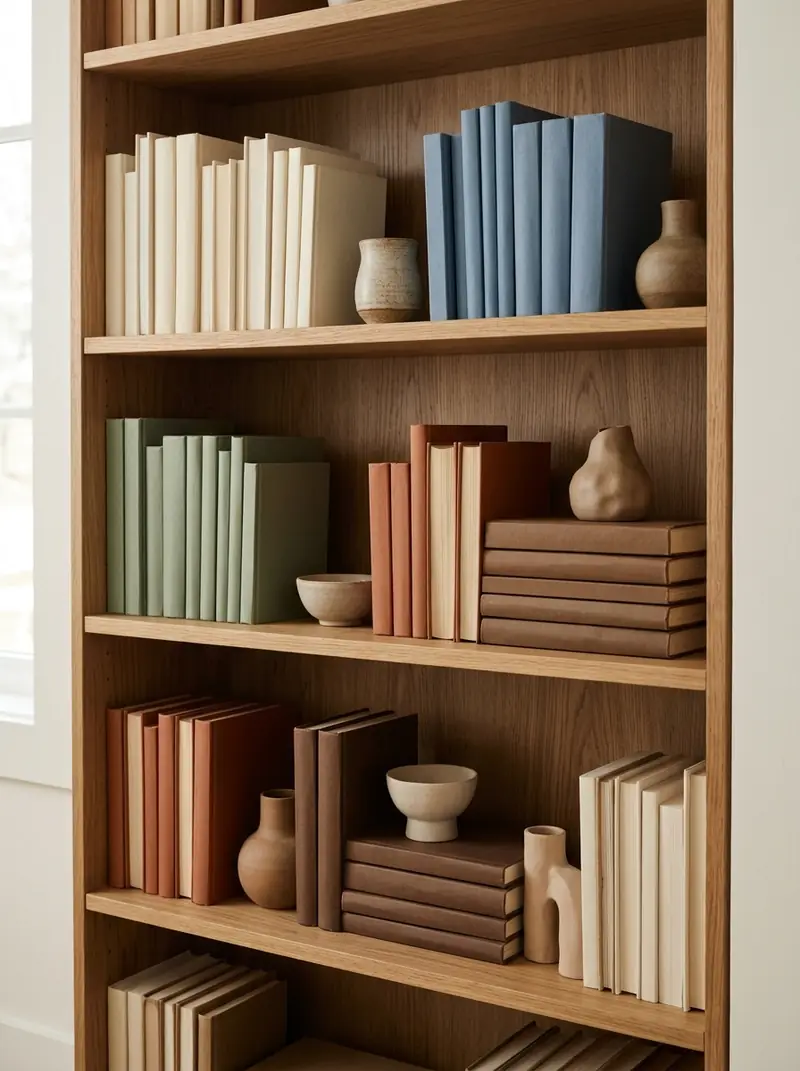
Instead of organizing the entire bookcase by color, create smaller color sections. This gives you the visual benefit without making the whole shelf feel overly arranged.
Separate each group with a decorative object or a little open space. The result feels structured but still relaxed.
15. Add a Small Sculptural Object

A sculpture adds shape to a shelf dominated by rectangular books. Choose a piece with a simple silhouette so it does not compete with everything else.
Place it beside a book group or on top of a horizontal stack. Varying shapes helps create a more dynamic composition.
16. Style Around a Favorite Color
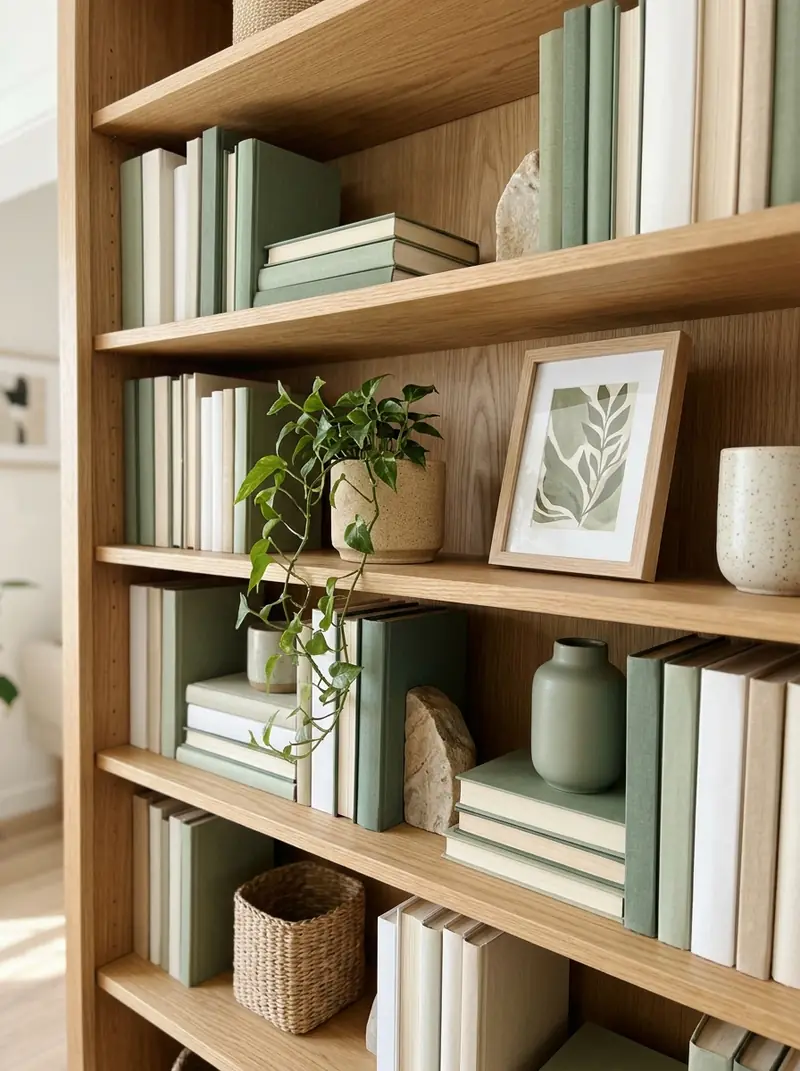
Choose one accent color and repeat it across several shelves. Sage, terracotta, dusty blue, or mustard can all work well.
The repeated color creates visual connection without requiring matching decorations. Keep the rest of the palette fairly quiet for balance.
17. Give Each Shelf a Different Rhythm
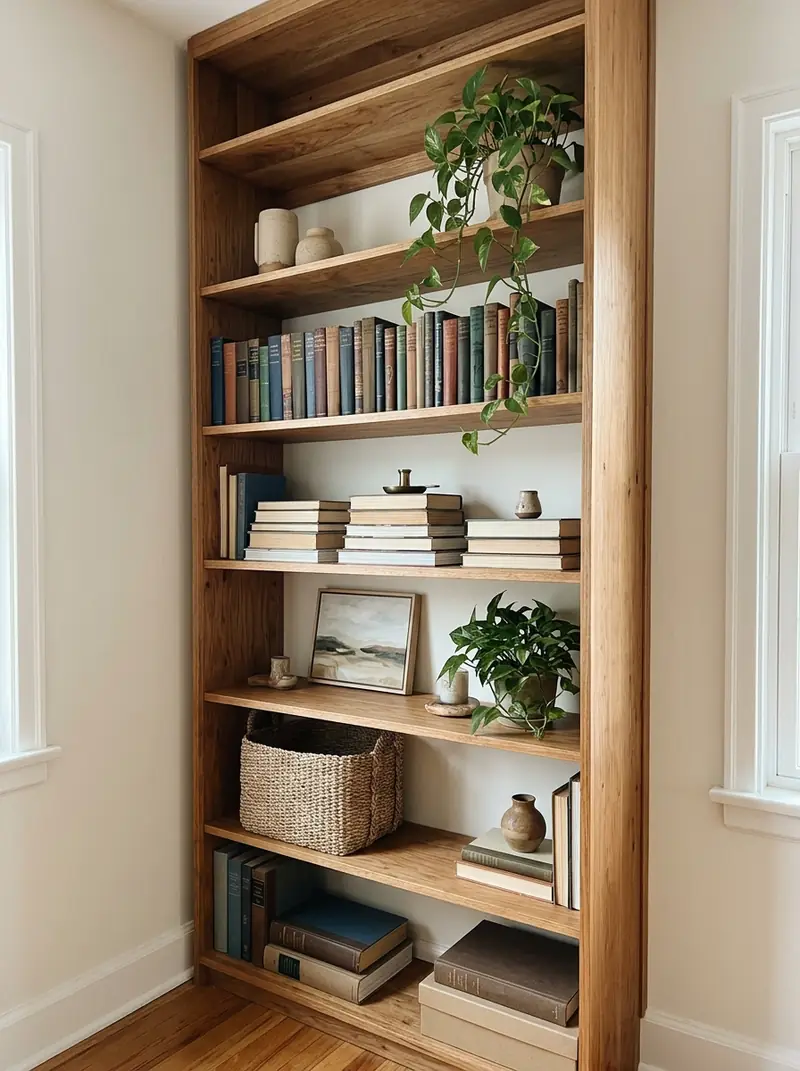
Avoid making every shelf follow exactly the same formula. Different arrangements create movement across the bookcase.
For example, use vertical books on one shelf and horizontal stacks on another. Add greenery or artwork to a third shelf for more variation.
18. Display Family Photos
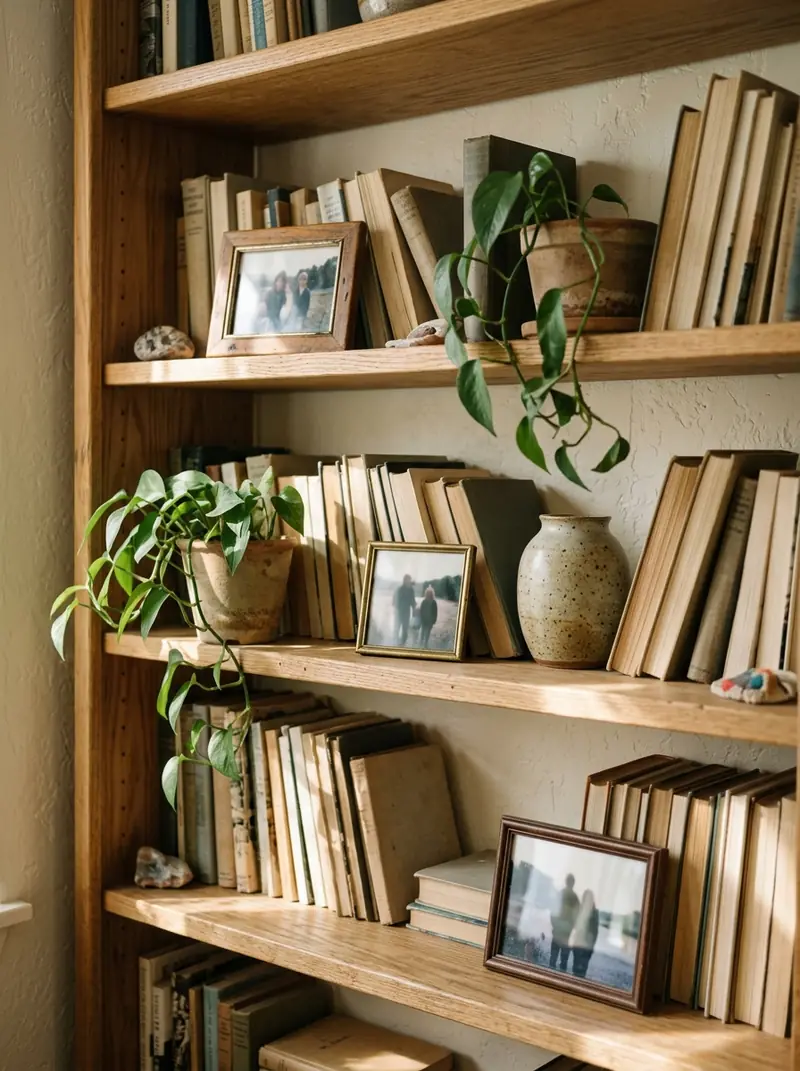
Family photos can make a bookshelf feel warmer and more personal. Use small frames so they complement rather than dominate your books.
Mix portrait and landscape frames for variety. Place them beside books or slightly behind a smaller decorative object.
19. Add Candles for Warmth

Candles add warmth through their shape, color, and material. Decorative holders can also bring ceramic, glass, or metal textures to the shelf.
If you plan to burn candles, keep them away from books, plants, paper, and other flammable objects. Never leave a lit candle unattended.
20. Make the Bottom Shelf Practical
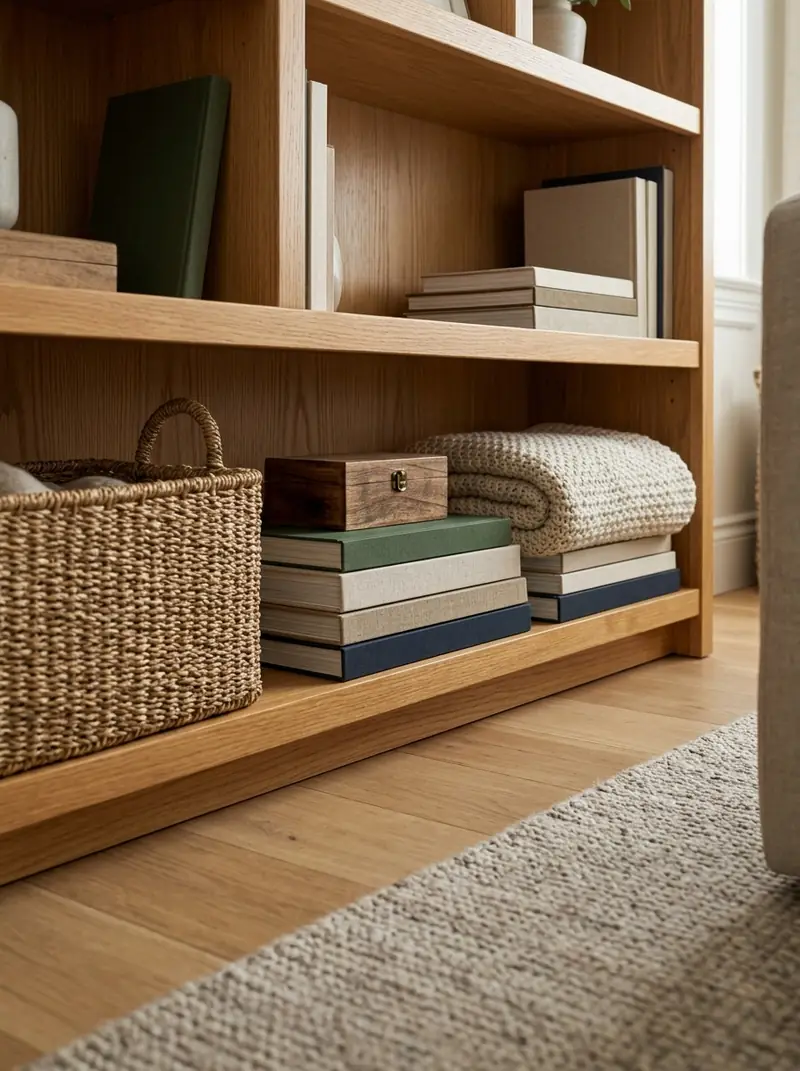
The bottom shelf does not have to carry your most decorative pieces. Use it for practical storage while keeping the arrangement tidy.
Large books, baskets, board games, magazines, or storage boxes can work well here. This keeps frequently used items accessible without crowding eye-level shelves.
21. Style a Minimalist Bookshelf
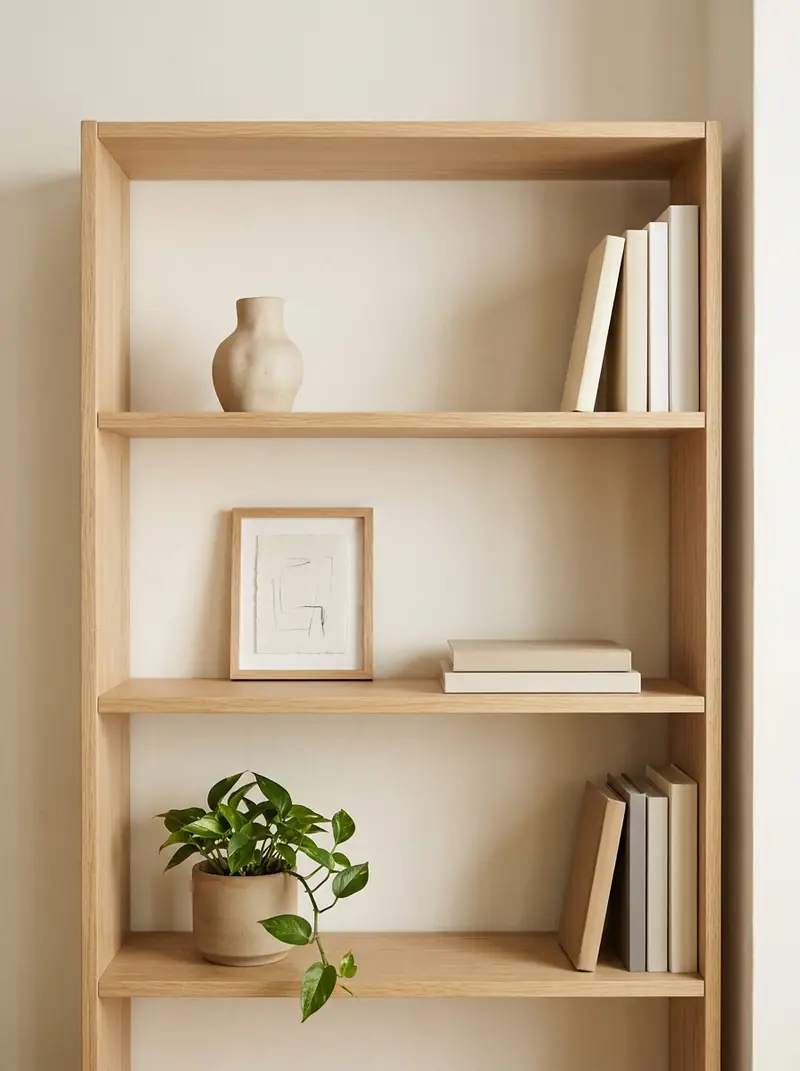
Minimalist styling works best when each item has enough room to breathe. Start with your essential books and add only a few decorative pieces.
Use simple shapes and a limited color palette. Empty space becomes part of the design rather than something you need to fill.
22. Create a Dark and Moody Shelf

Dark shelves can create a cozy library feeling. Pair deep wood or charcoal tones with warm brass, cream, or earthy accessories.
Keep some lighter objects in the arrangement so the shelves do not become visually heavy. Warm lighting can also bring out the texture of darker materials.
23. Add Texture With Handmade Ceramics

Handmade ceramics bring small variations that make shelves feel less uniform. Their uneven shapes can contrast nicely with straight book spines.
Use pieces with related earthy colors for a cohesive look. A few handmade objects are usually enough to create texture.
24. Use a Small Lamp for Evening Warmth
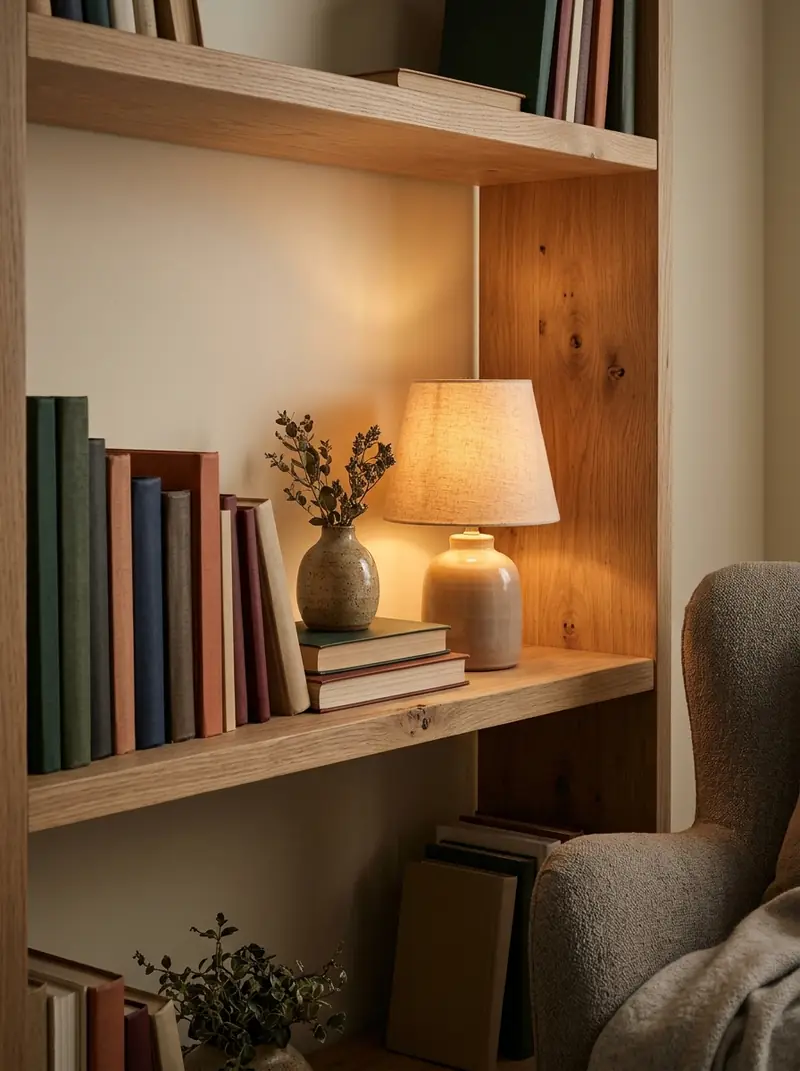
A small lamp can make a bookshelf useful after sunset while adding another layer of visual interest. Choose a compact lamp that fits securely on the shelf.
Keep electrical cords neatly managed and away from areas where they can be pulled. Check the lamp manufacturer’s clearance and safety instructions.
25. Create a Children’s Bookshelf Display

Children’s books naturally bring color and personality to a shelf. Group books by size or loosely by color for an easy-to-maintain arrangement.
Keep heavier objects low and secure tall furniture properly. Avoid small decorative pieces around young children who may put objects in their mouths.
26. Match the Bookshelf to the Room

A bookshelf looks more intentional when it connects with the rest of the room. Repeat one or two colors from nearby furniture, artwork, rugs, or cushions.
You do not need exact matches. Similar tones and materials are enough to make the whole room feel connected.
27. Let the Books Be the Main Feature
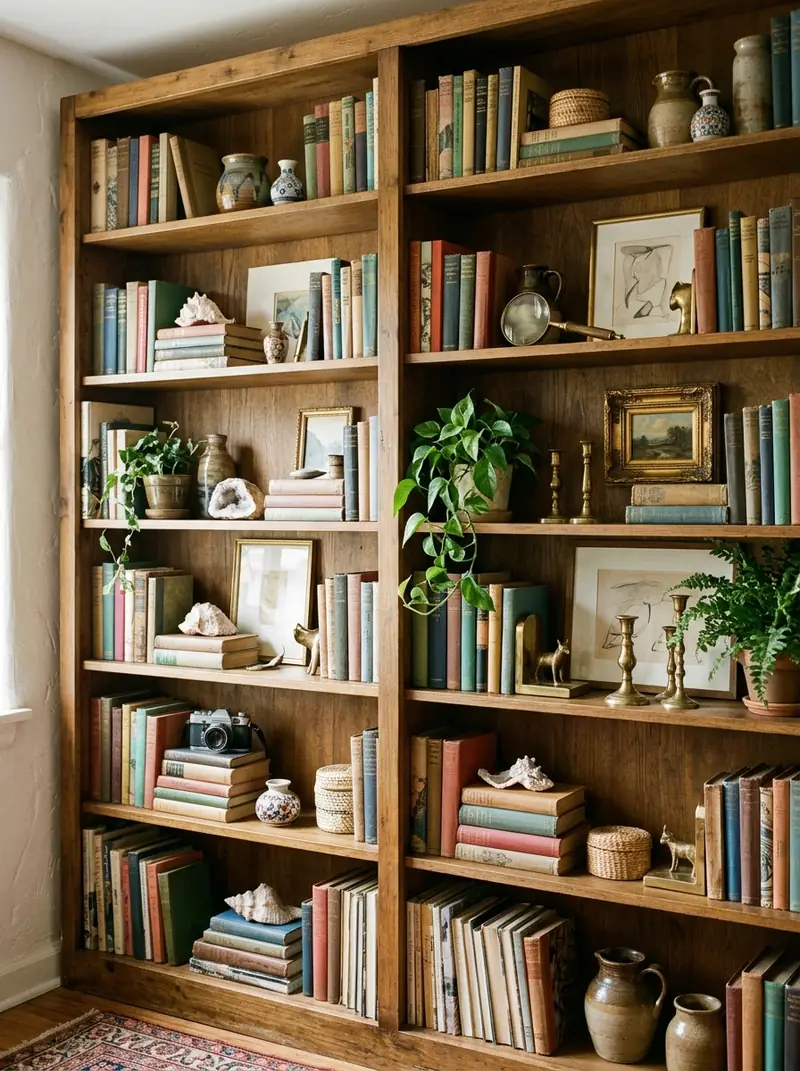
Sometimes the best bookshelf styling is simply showing off the books. Let favorite covers, interesting spines, and well-loved collections provide most of the visual interest.
Add only a few supporting objects around them. This keeps the bookcase functional while still giving it a thoughtful, finished appearance.
Simple Tips for Styling a Bookshelf
Start by removing everything from the shelves. This makes it easier to see the available space, shelf depth, and overall proportions before rebuilding the arrangement. Current design guidance also emphasizes mixing books with objects, varying height, and using personal pieces rather than treating a bookcase as storage alone.
Then return the books first. Group some vertically and stack others horizontally. Add your largest decorative pieces next, followed by smaller objects and greenery.
Leave a few areas visually quiet. Empty space helps separate groups and prevents a collection of small objects from becoming clutter.
Most importantly, keep your bookshelf usable. If you regularly read the books, arrange them in a system you can remember instead of sacrificing access for appearance.
How to Make Bookshelf Styling Feel Personal
Use objects that actually mean something to you. Family photographs, travel finds, handmade ceramics, favorite artwork, and treasured books usually create a warmer display than random decorations.
You can also personalize the color palette. Pull one or two shades from your room and repeat them through vases, frames, book covers, plants, or textiles.
The goal is not to make every shelf look perfect. A bookshelf usually feels more inviting when it shows some personality and signs of everyday life.
Common Bookshelf Styling Mistakes to Avoid
Using only vertical books: A completely uniform arrangement can look flat. Add horizontal stacks to create different heights.
Filling every gap: A packed shelf can quickly feel cluttered. Give important objects some surrounding space.
Using too many tiny decorations: Small objects can become visual noise when scattered everywhere. Group a few together instead.
Ignoring function: If you cannot easily find or remove your books, the styling is working against the shelf.
Making every shelf identical: Repeat colors and materials, but vary the arrangement from shelf to shelf.
Frequently Asked Questions
How do you style a bookshelf so it looks balanced?
Start with books, then add larger objects and finish with smaller accents. Mix vertical and horizontal arrangements, vary heights, and leave some breathing room.
Should books be arranged by color or subject?
Choose the system that works for you. Color creates a strong visual effect, while subject or author usually makes books easier to find.
How many decorative items should go on a bookshelf?
There is no fixed number. Start with a few meaningful pieces and add more only when the shelves still feel balanced and usable.
What looks good on a bookshelf besides books?
Plants, framed artwork, ceramics, sculptures, photographs, baskets, candles, and travel souvenirs can all work well.
How can I style a bookshelf on a budget?
Start with your existing books and household objects. Rearranging books, using plants, adding personal photographs, and repurposing baskets can change the look without buying much.
How do you make a bookshelf look cozy?
Use warm wood, soft colors, greenery, layered books, textured ceramics, and gentle lighting. Personal objects can also make the space feel more lived-in.
Final Thoughts on Bookshelf Styling
A beautiful bookshelf does not need expensive decorations or a complicated formula. Start with the books you love, add a few personal pieces, vary the heights, and leave enough space for the arrangement to breathe.
Ready to refresh your shelves? Pick one idea, gather what you already have, and start rearranging. For more inspiration, explore CraftedMode’s home decor and DIY craft ideas.
Keep exploring: browse more Home Decor ideas, read our creative jar crafts for DIY home projects, or head back to the CraftedMode homepage for fresh DIY inspiration.